Makoko: When Urban Renewal Becomes A Humanitarian Disaster
“Makoko’s plight is not new. Like many informal settlements in Lagos, the community has long lived under the shadow of eviction, often linked to the city’s mega-city ambitions. The memory of the Maroko demolitions of the 1990s—when over 300,000 people were displaced—still lingers as a painful reminder of how urban development can be pursued without regard for social justice”
By Kome Odhomor
By any standard of governance, the ongoing demolition of homes in Makoko, Lagos, is deeply troubling. What is unfolding in this historic waterfront community is not merely an urban planning exercise; it is a humanitarian crisis created by policy choices that appear to ignore human dignity, due process, and the lived realities of the urban poor.
Makoko, a century-old fishing settlement overlooking the Third Mainland Bridge, is home to hundreds of thousands of residents whose lives are intricately tied to the Lagos Lagoon. For generations, fishing has sustained families, funded education, and anchored a resilient community. Yet, since late December 2025, demolition squads backed by armed security operatives have reduced large sections of the community to rubble, displacing families without prior consultation, adequate notice, or clear resettlement plans.
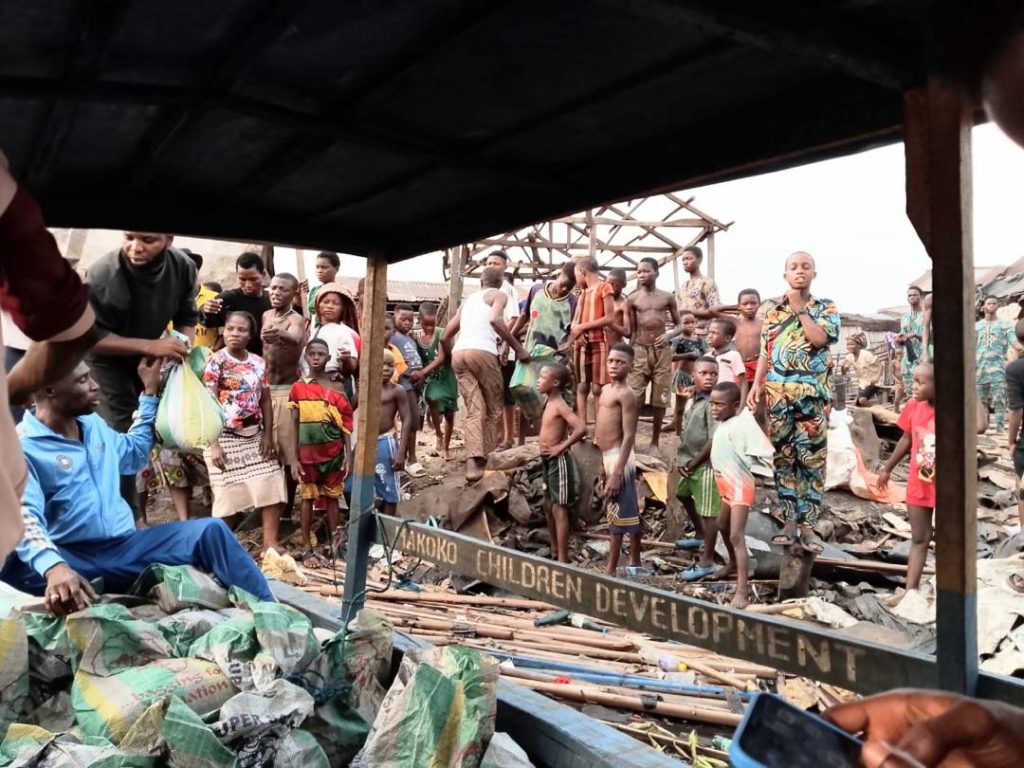
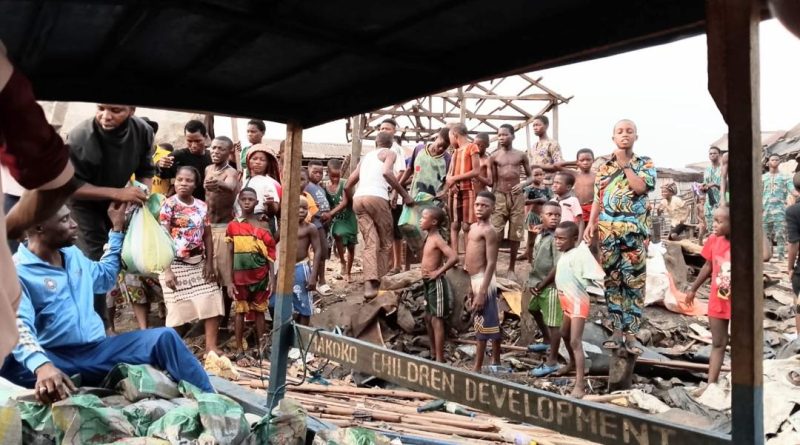
The justification offered by the authorities—that structures near power transmission lines pose safety risks—might appear reasonable at face value. However, the manner of execution raises serious questions. Residents insist that demolitions extended far beyond the agreed safety corridor of 100 metres, sweeping away homes, schools, clinics, and places of worship. By the time civil society organisations visited the area, hundreds of structures had already been destroyed, rendering thousands homeless.
More disturbing are the human stories emerging from Makoko. Families speak of homes destroyed without warning, belongings lost, and nights spent sleeping in canoes on the lagoon. There are accounts of teargas deployment during demolition, fires consuming buildings, and the tragic deaths of children and vulnerable persons amid the chaos. These are not statistics; they are lives irreversibly altered by state action.
Makoko’s plight is not new. Like many informal settlements in Lagos, the community has long lived under the shadow of eviction, often linked to the city’s mega-city ambitions. The memory of the Maroko demolitions of the 1990s—when over 300,000 people were displaced—still lingers as a painful reminder of how urban development can be pursued without regard for social justice. To see a similar pattern repeating itself decades later is both disappointing and alarming.
Urban renewal is not inherently wrong. Cities must evolve, infrastructure must be protected, and safety concerns must be addressed. But development that destroys livelihoods, displaces families without alternatives, and deepens inequality cannot be described as progress. A government committed to inclusive growth must recognise that housing is not a privilege, but a right, and that the urban poor are stakeholders, not obstacles, in city planning.
Today, Makoko’s children are out of school, parents are struggling to preserve fishing-based livelihoods, and families face exposure to the elements without access to clean water, sanitation, or healthcare. Insecurity has increased, and fear has replaced the fragile stability that once defined daily life in the community.
The Lagos State Government must halt further demolitions and open genuine dialogue with Makoko residents. Any safety-driven intervention must be transparent, legally grounded, and accompanied by humane resettlement options. Forced evictions without consultation or compensation undermine public trust and violate fundamental human rights principles.
Makoko did not emerge overnight, and it cannot be erased without consequences. How Lagos treats its most vulnerable communities will define the moral character of its development agenda. Urban progress should uplift people, not push them into deeper poverty. Anything less is a failure of governance and compassion.
Kome Odhomor, is of Health of Mother Earth Foundation (HOMEF)