Between Trump’s “Genocide” Claim And The New York Times’ Onitsha Trader Narrative
By Yushau A. Shuaib
Public debate in Nigeria is increasingly shaped not just by facts but also by emotion, identity, and organised outrage. My recent short Facebook post reacting to The New York Times (NYT) report on an Onitsha-based trader and activist triggered an avalanche of hostile responses — many from individuals identifying as Igbo and largely sympathetic to IPOB and the quest for Biafra.
What shocked me was not disagreement; that is part of democratic discourse. It was the coordinated pattern of abuse, libellous language, and unrelated propaganda, even after I deleted some of the very offensive posts of online cabals. A closer look revealed what I often call social media warriors from digital pressure groups — mobilised from coordinated platforms, less interested in dialogue than in silencing alternative views.
Surprisingly, my harmless Facebook post that sparked the anger was a simple paragraph, which reads: “They attacked us for calling out the reckless claim of ‘Christian genocide’ that painted all Muslims as guilty. Now they insist that The New York Times report on the Onitsha trader who urged an American strike on the Sokoto Caliphate is an editorial attack on Igbos. Haba! So they finally get the point.”
The inciting and provocative reactions to the post underscore a deeper national tension about narrative ownership.
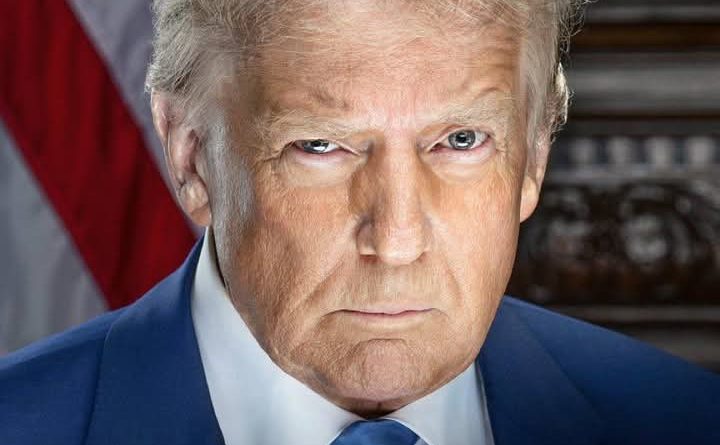
When U.S. President Donald Trump raised the inflammatory claim of “Christian persecution” and “genocide” in Nigeria, many Nigerians — Muslims and Christians alike — rejected that sweeping characterisation. The Nigerian government rejected it. Distinguished Christian voices such as Bishop Matthew Kukah warned against framing Nigeria’s complex insecurity through a purely religious lens.
Yet some local actors from particular sections of the country, based on their ethno-religious agitations, amplified Trump’s claim, using it to cast suspicion and aspersion on Nigerian Muslims collectively, as if millions were complicit in terrorism. That dangerous generalisation, strangely, was also applauded in some quarters.
During that debate, I wrote “Genocide Claim: President Trump, Ribadu’s Team and the Saudi Prince,” arguing that Trump’s claim was politically motivated, selective, and detached from Nigeria’s security realities. His foreign policy record — including his warm relations with Saudi Arabia — suggests strategic and financial calculations rather than religious solidarity. Nigeria’s insecurity, while grave, stems from criminality, weak governance, and socio-economic pressures, not a state-driven religious extermination.
That article, too, drew coordinated attacks. The goal appeared clear: intimidate dissent. Unfortunately for the attackers, I can’t be intimidated but laugh at their folly.
Now the debate has shifted following the New York Times report (NYT), which referenced Emeka Umeagbalasi, head of the Onitsha-based NGO Intersociety, whose claims about Christian killings reportedly influenced U.S. political conversations.
Curiously, rather than engaging with the substance of the report through a reasoned rejoinder, much of the anger on social media was directed at Taiwo Aina, the New York Times photographer credited under one of the images. She became the target of sustained online attacks because of her Yoruba name from many users who identified as Igbo.
What made their reaction even more troubling was that other journalists involved in the report — Saikoh Jammeh, Dionne Searcey, Ismail Auwal, and David Chidi Eleke — whose names were clearly listed, faced no comparable backlash. The selective outrage, especially against a female photojournalist whose role is largely technical and visual, says more about the emotional climate of the debate than about the report itself.
Before the NYT report, the BBC Global Disinformation Unit had investigated Intersociety’s figures and found them unverified and inflated. Despite the lack of verifiable data, such claims fed into U.S. conservative political narratives and Trump’s rhetoric. Independent conflict trackers such as ACLED consistently show that violence in Nigeria affects multiple communities, not Christians alone.
The BBC report noted that Intersociety’s narratives are shaped by southeastern political grievances and often align with IPOB-linked activism. PRNigeria’s earlier independent analysis similarly observed Intersociety’s shift from governance advocacy to persecution-focused messaging. That BBC investigation — authored by Olaronke Alo, Chiamaka Enendu, and Ijeoma Ndukwe — also attracted fierce backlash.
The pattern is troubling. When international actors portray Nigeria through a narrow religious-genocide frame, local extremists feel validated. But when global media question the credibility of those claims, it is suddenly labelled ethnic profiling.
You cannot condemn collective labelling only when it affects you.
Even more disturbing is the symbolism emerging online: viral videos of groups dressed in white garments, flanked by U.S. and Israeli flags, calling on Donald Trump and Prime Minister Benjamin Netanyahu to “rescue” them from Nigeria. Such appeals reflect deep frustration — but also dangerous faith in foreign intervention. History shows external powers act primarily in their own interests.
Nigeria’s unity debate is valid, and reforms like restructuring and federalism deserve serious discussion. But misinformation, hate narratives, and appeals to foreign powers will not bring justice — they only deepen mistrust.
We must ask: Who benefits from calling Nigeria a religious genocide zone? Who gains when neighbours become enemies? Who profits when foreign powers exploit our crisis?
Our insecurity is real, but it demands facts, responsible leadership, and national cohesion — not propaganda and sickening fake news by enemies of our unity.
Yushau A. Shuaib Author of An Encounter with the Spymaster
yashuaib@yashuaib.com