
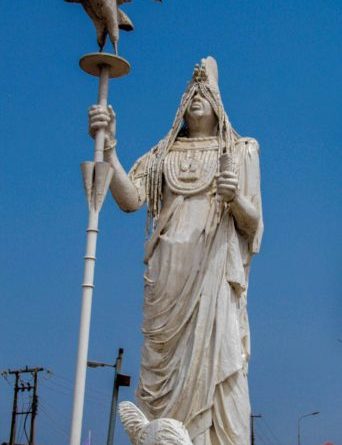
My Observatory:Why Ile-Ife Should Be A Global Pilgrimage City
By Sola Fanawopo
Recently, my inquisitive daughter asked me a profound question:
“Daddy, Muslims go to Mecca in Saudi Arabia for pilgrimage. Christians go to Jerusalem in Israel. Where do traditional religion worshippers go?”
Without much hesitation, I replied, “They should be going to Ile-Ife, the cradle and spiritual headquarters of Yorubaland.”
She paused, then asked again: “So why are they not going, considering that thousands of people live in Benin, Togo, Brazil, and other countries where Yoruba descendants and traditional worshippers are found?”
I had no answer.That silence has stayed with me.
Ile-Ife: Culture Without Support
During my last fact-finding visit to Ile-Ife, I encountered a familiar African dilemma: *authentic towns are under-invested, as though culture alone is sufficient for survival.
Culture, however, thrives best when supported by infrastructure, sanitation, and thoughtful planning.Ile-Ife, synonymous with Yoruba mythology and origin stories, stands today as a symbol of neglect. Its condition reminds us that culture must not only survive; it must be enabled by the state and society.
Among ancient Yoruba towns, Ile-Ife arguably has the most aged and backward infrastructure. Many roads are narrow and poorly maintained. Access routes from Osogbo, Ibadan, Ilesa, and Ondo are in distressing condition.Everything looks ancient, but not in the dignified sense. Rather, it appears abandoned by modern development.
This is a collective shame.The Yoruba nation has neglected a town to which we all trace our historical and spiritual roots.
The Cradle of Civilization
Ile-Ife is universally recognized as the cradle of Yoruba civilization. According to tradition, it is where the deities descended to establish the earth.
Historically, it was also a major artistic and technological center between the 12th and 15th centuries, famous for its bronze heads, terracotta works, and urban sophistication.
Yet, it is difficult to see how these ancient achievements have influenced modern development across Yorubaland.One remarkable example of indigenous innovation is the potsherd pavement tradition.
Lessons from the Past: Potsherd Pavements
I encountered these fascinating structures at the Ile Ife Museum.
These walkways were crafted from broken pottery and quartz pebbles, arranged in beautiful and durable patterns.
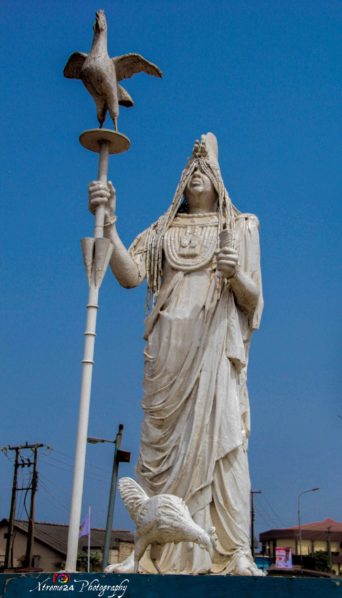
They were commissioned by Queen Luwo Gbagida, the 21st Ooni of Ile-Ife, to keep her feet clean from mud.Often laid in herringbone and geometric designs, these pavements were:
Durable
Hygienic
Aesthetically refined
Technically sophisticated
They served as courtyards and passageways, reflecting advanced urban engineering long before colonial influence.
They are clear indicators of the highly urbanized nature of ancient Yoruba civilization.
Reclaiming Our Heritage
I find it troubling that such innovations remain confined to museums, rather than being reimagined in contemporary architecture.Imagine modern Yoruba towns incorporating:
Indigenous paving designs Cultural landscaping Heritage-centered urban planning Clean, well-maintained pilgrimage routes.
This is how civilization is preserved, not by nostalgia alone, but by practical reinvention.This is how we tell the world that we are not inferior to any race.
This is how we show that African civilization did not wait for external validation.
This is how we affirm that organized society, engineering, and aesthetics flourished in Yorubaland long before modern times.
A Call to Action
If properly developed, Ile-Ife could become:
A global spiritual destination
A major cultural tourism hub
A center for African heritage studies
A source of economic renewal
Like Mecca and Jerusalem, Ile-Ife has the spiritual and historical credentials. What it lacks is intentional investment and political will.
We owe it to ourselves, and to future generations, to restore dignity to our spiritual homeland.
Civilization is not only inherited.It is maintained, renewed, and projected.
And for the Yoruba people, that renewal must begin in Ile-Ife.
Ṣọlá Fanawopo writes from Igbajo