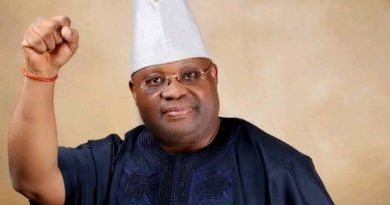
Olókùnkùn Of Òkùnkùn-Birimu, By Lanre Ogundipe
In Yoruba political folklore, titles are rarely ornamental. They carry meaning, sometimes praise, sometimes warning, and occasionally a quiet rebuke wrapped in poetic elegance. A title may celebrate power, but it can also reveal the peculiar character of that power.
Which is how a curious appellation has begun to circulate in the public imagination: Olókùnkùn of Òkùnkùn-Birimu—the Lord of Layered Darkness.
It is a title that would ordinarily belong in the realm of oral theatre, perhaps whispered by palace drummers or murmured in the courtyard of elders where proverbs are sharpened into commentary. Yet in today’s Nigeria, the title appears to have found an unlikely relevance in the modern bureaucracy of electricity administration.
For in a nation where power supply flickers like a reluctant candle in a storm, the steward of the electricity ministry presides over a landscape where darkness has become the most reliable constant.
From Lagos to Kano, from Ibadan to Port Harcourt, Nigerians measure electricity not by the hour but by moments of fortune. The arrival of power has the unpredictability of rainfall in the harmattan season. Homes celebrate its return as though greeting a long-lost relative. Businesses pause their operations whenever the light disappears, and the familiar growl of generators resumes its place as the unofficial anthem of the Nigerian economy.
It is a curious arrangement for a country so richly endowed with the natural ingredients of energy. Nigeria possesses abundant natural gas capable of powering thermal plants. Rivers descend from its highlands with the promise of hydroelectric generation. And the tropical sun bathes the country with a relentless brightness that could illuminate cities if properly harnessed.
Yet paradox has become the defining architecture of the Nigerian electricity sector.
Billions have been invested in reforms, privatisation schemes, generation contracts and transmission projects. Committees have been convened. Roadmaps have been unveiled. Strategic blueprints have been drafted with the solemnity of national salvation.
Still, the darkness lingers.
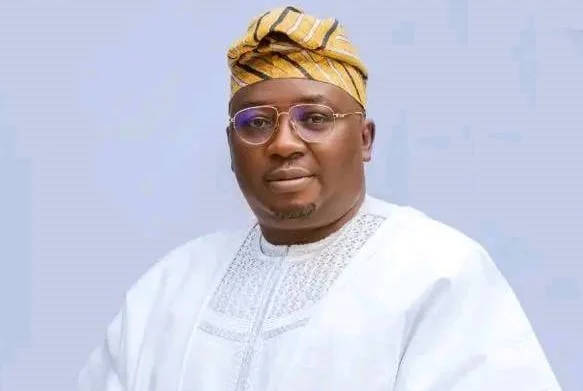
Into this landscape steps the Minister of Power, His Excellency Adebayo Adelabu, a man whose public confidence has the polished sheen of political ambition. His admirers describe him as energetic. His critics, less charitable, attribute to him a certain majestic self-assurance—what some observers have mischievously coded as “Gance.”
Confidence, of course, is not a crime. Indeed, leadership often requires a measure of it.
But confidence acquires a curious dimension when it coexists with a national grid that appears to stumble with increasing regularity.
For while the country wrestles with unstable electricity supply, a new innovation has quietly taken centre stage: the distribution of solar panels as an alternative remedy for darkness.
Solar panels, in themselves, are not objectionable. Renewable energy represents an important component of modern power systems. Countries across the world are investing heavily in solar technology as part of their energy transition strategies.
Yet the symbolism of distributing solar panels in a nation whose central electricity grid continues to falter is difficult to ignore.
It creates the impression of a country slowly abandoning its collective power system and retreating into thousands of individual solutions—each household erecting its own miniature sun above the roof.
If the national grid cannot bring the light, then perhaps every citizen must manufacture his own dawn.
Such policy improvisation may yet prove useful, but it also invites a deeper question: what exactly has become of the vast public investment already poured into Nigeria’s electricity sector?
Over the past two decades, successive governments have committed staggering sums to power sector reforms. Generation plants have been rehabilitated. Transmission lines have been expanded. Distribution companies have changed hands under privatisation arrangements designed to unleash efficiency.
The financial ledger of these reforms stretches into the billions of dollars.
Citizens therefore have every right to ask a simple question: where has all that light gone?
Public finance operates under clear constitutional principles. Government expenditure must follow legislative appropriation. Funds allocated for specific purposes cannot simply drift into alternative uses without lawful authorisation. Where adjustments become necessary, procedures such as virement exist precisely to ensure transparency and accountability.
Electricity policy is not exempt from these disciplines.
When enormous public resources are invested in a sector as critical as power supply, Nigerians are entitled to demand measurable results. Power plants should generate electricity. Transmission lines should carry it. Distribution networks should deliver it into homes, factories and hospitals.
Electricity is not an abstract policy aspiration. It is a tangible service whose success can be measured every time a light switch is turned on.
Yet the lived reality of Nigerians suggests that the national power system still struggles to perform this most basic function.
In many cities, entire neighbourhoods spend days in darkness. Small businesses rely on generators whose fuel costs consume profits that could otherwise be invested in expansion. Hospitals ration electricity to protect life-saving equipment. Universities suspend research activities whenever power outages interrupt laboratories.
The economic consequences ripple quietly across the nation.
Factories relocate to countries with more reliable energy infrastructure. Entrepreneurs abandon ventures that cannot survive the unpredictable cost of self-generated electricity. Students attempt to study under lanterns in an age when digital learning demands stable power supply.
Darkness, it seems, has become both a metaphor and a material condition.
Which returns us, inevitably, to the title that began this reflection: Olókùnkùn of Òkùnkùn-Birimu.
In the poetic logic of Yoruba expression, such a title carries layers of meaning. It evokes a ruler whose domain is shrouded in shadows, a custodian of night presiding over territories where daylight arrives reluctantly.
It is not a title any public official would consciously claim. Yet reputations in politics are often bestowed by circumstance rather than design.
If electricity remains scarce while solar panels multiply like emergency lanterns, the metaphor will only grow stronger.
And politics, ever attentive to symbolism, will take note.
For rumour already whispers that the Honourable Minister may harbour ambitions beyond the confines of his present office. The ancient city of Ode-Oyo, with its imperial memories and historic courtyard, is said to appear in the imaginative geography of future campaigns.
Should such ambition materialise, the voters of Oyo State will have the privilege of assessing the record.They will examine the stewardship of the electricity sector. They will weigh promises against outcomes.
They will consider whether the architect of solar lanterns can also deliver the steady illumination of a functioning national grid.
Democracy provides that opportunity
In the end, electricity policy cannot be judged by speeches, ceremonies or press briefings. It will be judged by the quiet miracle of reliable power flowing through homes and industries across the country.
Until that miracle becomes routine rather than rare, the metaphor of darkness will continue to haunt the corridors of the power ministry.
And the title of Olókùnkùn of Òkùnkùn-Birimu will remain suspended in the national conversation—less as an insult than as a reminder that in matters of electricity, Nigerians are still waiting for the dawn.
Lanre Ogundipe Public Affairs Analyst, Former President, Nigeria and Africa Union of Journalists writes from Abuja