10 Major Takeaways From President Tinubu’s State Visit To The United Kingdom
By Temitope Ajayi
Nigeria returned to global significance with the just-concluded state visit to the United Kingdom by President Bola Tinubu. The President and his wife, Senator Oluremi Tinubu, played their roles well to critical acclaim. Both the President and the First Lady brought grace to the occasion with their poise, elegance, and comportment. Since the visit ended on Thursday, if the Nigerian brand stock had been traded on the London Stock Exchange, the share price would have risen astronomically, delivering unprecedented value to shareholders.
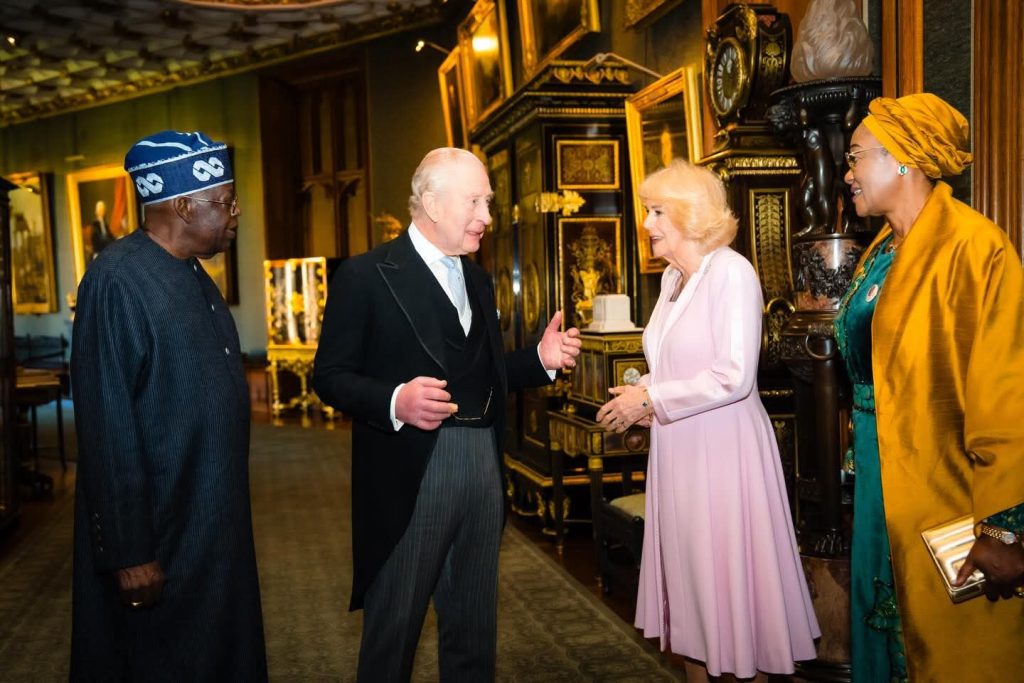
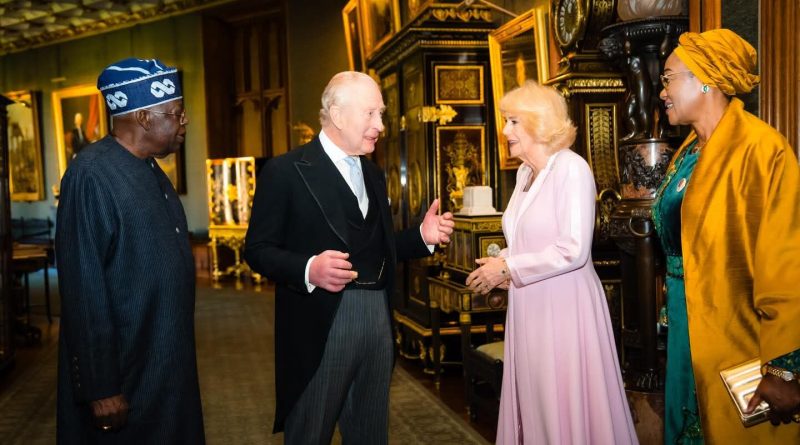
The reception at Windsor by the British Royal Family, led by King Charles III and Queen Camilla, which ended with a state banquet, marked a high-profile foreign policy moment for Nigeria and President Tinubu. If head-of-state diplomacy underscores the irreplaceable role of a leader in stewarding and cementing strategic partnerships between two nations, then President Tinubu’s visit to the UK lived up to its billing. The visit, which has been described as a masterpiece of diplomacy, especially given the special bond between Nigeria and the United Kingdom, has delivered clear dividends to the Nigerian people, as evidenced by the signing of some bilateral agreements across critical sectors of the economy.
Here are the key takeaways from the state visit:
1.Lagos ports modernisation funding: One of the major wins of President Tinubu’s visit to the UK is the £746 million financing secured for the modernisation of the Apapa and Tincan Island ports in Lagos through the UK Export Finance, being coordinated by Citibank. The financing deal was signed on behalf of the federal government of Nigeria by the Minister of Finance and Coordinating Minister of the Economy, Wale Edun. The deal will expand the ports’ infrastructure and automation, double the capacity of the two ports, reduce congestion, improve trade facilitation, and generally boost Nigeria’s competitiveness as a maritime hub in West and Central Africa. Since Apapa Port was established in 1913 and Tincan Island Port was commissioned in 1977, the two premier ports in Nigeria, which account for over 70% of Nigeria’s port activities, have not undergone major refurbishment. Rather than relying on treasury funding, the UK funding deal will ease fiscal pressure on budget provisions. The ports’ modernisation will ensure a comprehensive rehabilitation of ageing quay walls, deploy modern cargo-handling systems and completely digitise port operations to deliver efficiency and quick turnaround for the clearing of goods, thereby boosting economic output and national productivity. The modernisation will also boost job creation across port activities and the ecosystem’s value chain.
2. Expanding trade opportunities: President Tinubu and Prime Minister Keir Starmer, during their bilateral meeting at No 10 Downing Street, agreed to deepen trade between Nigeria and the UK. Nigeria, as the largest market, offers huge opportunities for UK goods and services as the country seeks to expand market access outside the European Union. To increase trade volume between the two countries, which currently exceeds 8 billion pounds per annum, Nigerian businesses, especially small and medium-scale business owners, will be able to take full advantage of the duty-free and reduced-tariff measures granted by the UK government under its Developing Countries Trading Scheme (DCTS). Under this scheme, over 3,000 products from Nigeria will get easy access to the UK market. The goods include cocoa, cashew nuts, sesame seeds, ginger, craft and textile products. This scheme will further boost Nigeria’s foreign exchange earnings from the non-oil sector.
3.Security and Defence: With the mounting security challenges being confronted by the country, especially terrorism and banditry that have become a chokehold on social and economic activities across the country, especially in the North-East and North-West, where the Boko Haram insurgency and kidnapping for ransom have become endemic, President Tinubu, during the state visit, sought and secured the support of the British government for more military hardware, logistical and training support for Nigeria’s armed forces and cooperation on intelligence sharing. President Tinubu, during a bilateral meeting with Prime Minister Keir Starmer, harped on the urgent need for greater support from the United Kingdom to Nigeria to end the ugly incidents of insecurity in Nigeria. During the visit, Nigeria’s minister of defence, General Christopher Musa (Rtd), held a bilateral meeting with his British counterpart, Vernon Coaker, and signed a memorandum of understanding to operationalise defence cooperation and coordination further. President Tinubu made the point during and after the state visit to the UK that his administration would seek all internal and external solutions and support to end the scourge of insecurity in Nigeria.
4.Deal on £500 million investment in agriculture: Nigeria Sovereign Investment Authority and UK-based Asset Green Limited signed a £500 million deal for the development of a large-scale integrated dairy production and processing factory in Nigeria. Under the deal, which will transform Nigeria’s dairy value chain, Asset Green Limited, a private company focused on agriculture and food processing through its agri-food platform, Agrium Capital Limited, executed the agreement with NSIA. The initiative will see the development of 20,000 hectares of climate-smart pasture for livestock feeding alongside a dairy farm with about 10,000 milking cows. There will also be a modern processing facility that will manufacture a range of dairy products, such as fresh milk, butter, cream, milk powder, and up to 15,000 metric tonnes of infant formula annually. The minister of industry, trade and investment, Jumoke Oduwole, and the chief executive of NSIA, Aminu Umar-Sadiq, executed the deal on behalf of the government of Nigeria.
5. Inclusive education opportunity: Another outstanding outcome of President Tinubu’s visit to the UK is the partnership with Coventry University to bring UK degrees to Nigeria. The Minister of Education, Tunji Alausa, signed the agreement to establish a Coventry University campus in Alaro City, Lagos. This will facilitate easy access to UK university education in Nigeria and help conserve foreign exchange for families, as their children can now stay in Nigeria and receive the same university education they would have spent huge sums of money to obtain in the UK. The proposed campus in Alaro City, Lagos, will offer bachelor’s and master’s programmes across STEMM, business, and TVET, with admissions expected between Q3 and Q4 of 2026. According to the Minister of Education, Coventry University setting up a campus in Nigeria is beyond access: “This is about building Nigeria’s human capital – developing the skills, talent, and workforce needed to drive innovation, productivity, and long-term national growth.”
At the sub-national level, the Lagos State Government also signed a memorandum of understanding with Estar, an organisation with expertise in digital learning, to bring modern digital learning platforms and infrastructure into our public primary and secondary schools. The agreement, signed by Governor Sanwo-Olu, will empower Lagos State students with access to curriculum-based tools that support critical thinking, communication, decision-making, leadership, and AI skills. It will also strengthen reading, comprehension, confidence, and classroom participation.
6. Private sector-led youth empowerment: Another high point of President Tinubu’s UK visit was the partnership agreement between the King’s Trust and Access Bank. This private-sector-led initiative will leverage King’s Trust International’s expertise in youth development, alongside Access Bank’s pan-African reach, to support programmes that equip young people with the skills, confidence, and guidance needed to pursue meaningful employment and entrepreneurship. Through this endeavour, thousands of young Africans will gain pathways to sustainable livelihoods and opportunities to realise their potential. At the ceremony to consummate the agreement were Access Bank chairman, Aigboje Aig-Imoukhuede, and executive vice-chair of the Aig-Imoukhuede Foundation, Ofovwe Aig-Imoukhuede.
7. Expansion of opportunities in the creative economy: The Minister of Art, Culture, Tourism, and Creative Economy, Hannatu Musawa, led the Nigerian government delegation to Lancaster House for a bilateral engagement at a Creative Industries Roundtable with the British government led by her counterpart, Chris Bryant. The high-level engagements aimed to strengthen UK–Nigeria collaboration across the creative economy. Participants from the UK at the forum include a strong delegation of industry leaders and stakeholders across music, film, publishing, design, and technology to chart a clear course for future collaboration.
During the bilateral engagement, discussions focused on unlocking growth, addressing structural barriers, and advancing critical priorities, including skills development, access to finance, and the role of intellectual property in scaling creative enterprise. While speaking on the new framework for cooperation with the UK, Minister Hannatu said: “As Nigeria continues to be recognised as a priority growth market, we remain committed to building strategic partnerships that position our creative industries for global competitiveness.”
8.Agreement on migration: Nigeria’s Minister of Interior, Olubunmi Ojo, and the Secretary of State for the Home Department of the Government of the United Kingdom and Northern Ireland, Shabana Mahmood, signed the agreement on migration. The MoU establishes a framework to facilitate a regulated and safe migration flow between the two countries and to encourage further bilateral cooperation in the fight against irregular migration and associated acts by citizens of each country, in accordance with their respective immigration and citizenship laws and extant international treaties, conventions, protocols, agreements, and charters. Under the agreement, Nigeria and the United Kingdom will work together to secure the dignified return of their nationals who do not, or no longer, have the right to enter or remain in the territory of the other country. A clear condition in the MoU is that the returnees concerned are bona fide nationals of the country and are treated with dignity and respect, with due regard to their human rights and fundamental freedoms. Under the agreement, law enforcement officers in each country will take the necessary action to protect the interests and well-being of citizens of either party and to mitigate conflict triggers related to migration matters.
9.Infrastructure Investment Forum: Nigeria hosted an Infrastructure Investment Forum in London at the headquarters of Standard Bank International, where the chairman of the Nigerian Exchange Group, Dr Umaru Kwairanga, Minister of industry, Trade and Investment, Jumoke Oduwole, and minister of state for finance, Taiwo Oyedele, made pitches to global investors on investment opportunities in infrastructural development in Nigeria. The senior officials told the international investors that Nigeria offers a compelling investment case anchored on natural and human capital. They identified key areas in renewable energy, oil and gas, roads, pipelines, housing, ports, aviation, rail, and other critical areas that offer significant returns on investment.
10. UK-Nigeria Project Agglomeration Compact: Mutandis Africa, a pan-African investment and trade facilitation organisation in partnership with the Nigerian Revenue Service, hosted a forum at the House of Lords to design a framework to boost Foreign Direct Investments into bankable projects at the sub-national level. Enugu State Governor, Peter Mbah, and senior federal government officials, along with private sector leaders, engaged directly with top players in the UK’s investor community, including private equity funds, sovereign wealth investors, development finance institutions, family offices, and pension capital managers. Governor Mbah used the forum to pitch major tourism and hospitality, power, real estate, agriculture and food processing projects in Enugu State to investors.
President Tinubu’s state visit ended on a very high note on the second day at Tate Modern, where he was a special guest at the ‘Nigeria Modernism’ art exhibition alongside the UK’s Deputy Prime Minister, David Lammy, and other art patrons. Beyond the artistic showcase and grandeur, the exhibition also highlighted Nigeria’s soft power and foregrounded its cultural assets.
On the whole, the state visit was a huge success. A preponderance of views from foreign policy experts, analysts and pundits affirm the significance of the visit at a time Nigeria is gradually being taken seriously around the world on the back of the sterling economic reforms of President Tinubu. The state visit was a massive boost to Nigeria’s global standing and profile, and a signal to the world that the country has enormous potential and remains the giant of Africa.
-Ajayi is Senior Special Assistant to President Tinubu on Media and Publicity