The Architect Of Its Own Ruin: Why The Nigerian Opposition Is Responsible For Its Impotence
By Mark Adebayo
As an opposition spokesman, it is much easier for me to tow the much convenient and simplistic line of blaming the ruling All Progressives Congress, APC, for all the current woes of opposition political Parties. But in this article I have chosen not to play the devil’s advocate per se, but to be critically objective.
Ever and anon, the Nigerian opposition leadership has demonstrated unparalleled obtuseness in engaging landmark political scenarios. That knack for careless unperceptiveness has continued to cost the opposition Parties sterling materials who would have bolstered its abutments. Those ones end up being targeted and poached by the ruling Party. Do you blame them – the poacher and the poached?
Nigeria’s democracy is at a critical crossroads. As the nation grapples with economic shifts and harrowing security challenges, the fundamental mechanism of democracy’s checks and balances—a vibrant opposition—is conspicuously enfeebled. While we frequently point to the ruling All Progressives Congress (APC) for the shrinking political space and accusing it of orchestrating a one-Party agenda, a deeper look reveals that the primary architect of the opposition’s weakened state is the opposition itself.
The current state of the major opposition Parties, the Peoples Democratic Party (PDP), the Labour Party (LP), and the recent opposition golden baby of all, the African Democratic Congress(ADC) is one of self-inflicted decline, marked by internal warfare and a startling lack of ideological depth. Sometimes, I wonder aloud if the ADC did its due diligence perfectly before consumating the coalition. If not, it qualifies to be categorized as an unpardonable sin. Not after the ADC coalition has given Nigeria the much desired glimmer of hope should anything rock the boat. The multiple and unending litigations unsettle me considerably. Just one successful litigational disaster could crash the plane. Seems to me that many ‘i’s were left undotted and many ‘t’s left uncrossed. That is the nature of Nigeria’s politics. Many so-called ‘uncritical stakeholders’ are ignored in the scheme of things. Those ones may rise up against perceived injustice to rock the boat due to their vulnerable state. The APC knows this.
One of the most visible reasons for the opposition’s failure is its inability to be proactive on many fronts. It lacks the essential quotient of preempting the ruling Party and be ahead of its gameplans. The opposition seems confused as to how to manage its own internal affairs. The PDP, once a formidable national machine, has spent the last three years in a state of perpetual crisis. Factions loyal to figures like Nyesom Wike and Atiku Abubakar turned the party into a battlefield of egos rather than a platform for governance.
Similarly, the Labour Party which captured the imagination of millions of Nigerians in 2023, has been bogged down by leadership disputes between Julius Abure and factions backed by the Nigeria Labour Congress (NLC). When a party cannot agree on who its chairman is, how can it convince a nation it is ready to lead?
In the course of my study for a Master’s degree, one of the theories of political anthropology that fascinated me the most was processualism which core concepts, unlike earlier structural-functionalist approaches that focused on stable social systems and equilibrium, processualism emphasizes conflict and its resolution as the primary drivers of politics and social transformation and emphasizes that individual “political agents” use power, manipulation, and various strategies to achieve public or personal goals. Most Nigerian politicians are disproportionately driven by personal goals.
Processualism exposes us to the unpampering nature of political interactions that rewards cold-blooded, intentional, and unflagging stratagem while it punishes naivety and presumptuous cargo-cult mentality with persistent failure. The Nigerian opposition falls in the latter category.
The ideological void in opposition parties is a damning albatross. The absence of a clear, alternative vision for Nigeria beyond the refrains of “APC represents bad governance” and “let’s send Tinubu away” is essentially disingenuous. Prominent analysts, including Olisa Agbakoba, have noted that opposition parties often fail to engage on substantive policy. Instead of offering detailed solutions to the suffering of Nigerians, the opposition has largely limited its activities to reactive lamentations.
Recently, in the immediate aftermath of the Abuja Municipal Area Council election, Professor Chidi Odinkalu, a foremost academic and former chairman of the National Human Rights Commission, NHRC, appeared on Channels TV’s Politics Today and, inter alia, described the country’s opposition political parties as an “utter disgrace”. I quote him verbatim here;
“I think the opposition forces, you know, the ADC, whoever else; I don’t even know which PDP there is now, if there is any, because Nyesom Wike is APC faction of PDP, it seems to me.
“But the so-called opposition forces, in my view, are an utter disgrace. And I say that with no apologies to anybody”.
Arise TV’s popular presenter, Rufai Oseni, also recently described the opposition as a “coalition of jokers”. Rufai is one of the most virulent critics of the APC administration and supportive of the opposition all along. But he is getting fed up with opposition cluelessness which informed his outburst on live television against the opposition.
Without a distinct ideological differentiation from the ruling party, the opposition becomes nothing more than a “special purpose vehicle” for capturing power, lacking the moral authority to inspire a weary electorate. The resulting organizational fatigue has triggered a wave of defections has further enervated opposition structures. Governors and lawmakers are jumping ship to the APC not necessarily because of shared values, but because their original parties have become “immobile or inoperable”. High-profile figures, including several state Governors, have defected to the ruling Party, further consolidating the APC’s grip on power with 31 Governors in its kitty out of 36. Governor Bala Abdulkadir Mohammed of Bauchi State remains undecided yet and may also yield to the gravitational pull of the ruling Party except he makes good his public declaration of moving to the ADC. But Nigerians have learnt not to take politically exposed persons for their words.
The opposition’s leadership has no space for inclusive engagement, no matter how some of us have tried to engage. Unless you are a former Governor, former Minister, former or current lawmaker, no matter your capabilities or contributions to opposition activism, you’re neither appreciated, acknowledged, nor supported.
The Coalition of United Political, CUPP, became a vibrant opposition megaphone going into the 2019 general elections. Through the personal efforts, fervent activism, and consistent opposition advocacy of my then colleague, now member representing Ideato Federal Constituency of Imo State, Honorable Ikenga Imo Ugochinyere, CUPP was made popular and recognized as Nigeria’s leading opposition rallying point. To the best of my knowledge, aside from the early days of CUPP’s formation, no funding to support CUPP’s activism was made available by the leading opposition Parties. Ikenga was funding his own office and activities as CUPP’s spokesman wholly. Same with me when I took over. CUPP became so much a thorn on the Buhari administration that the government decided to deregister all the political Parties affiliated with the CUPP. 74 political Parties fell victim of the sledge hammer of INEC’s deregistration rampage. For over ten years, since 2015 that APC came to power, INEC refused to register any political Party until recently that two were reluctantly registered. This same CUPP has not received one kobo of support from the so-called opposition leaders since after the 2019 general elections. All my media activities since I took over fully as CUPP’s national spokesperson for over three years now have been wholly self-sponsored. That has significantly impacted on the effectiveness of CUPP so far because opposition figures have refused to give support, even minimally, and there is limitation to what a single individual can do.
The result is the lack of a combined biting force for the opposition that is supposed to be firing on all cylinders and aggregate all resources at its disposal. But the Nigerian opposition has reduced itself to reactive opportunism. Many valiant opposition voices and soldiers have become severely demoralized.
As the 2027 general elections approach, the window for redemption is closing. The opposition’s current strategy of blaming the Electoral Act or “state apparatus” for its woes rings hollow when its own house is on fire. Unless these parties can move beyond personality-driven leadership and prioritize service over internal squabbles, they will remain the authors of their own obsolescence.
The current opposition alliances have a lot to learn from the APC whilst the latter was in the opposition. I cannot imagine the APC being this lethargic with the current state of Nigeria if it’s the one in the opposition. If you don’t know how to play opposition, you don’t expect the Party in power not to take advantage of your cluelessness. Integral to that is the not-so-noble past of some foremost opposition figures who had involved themselves in actions and utterances considered unjust and antidemocratic while in government at some point.
Nigeria deserves a strong alternative. But until the opposition stops fighting itself and ceases to underutilize its best materials, it cannot hope to fight for Nigerians. Desperately seeking for power is never equivalent to seeking good governance.
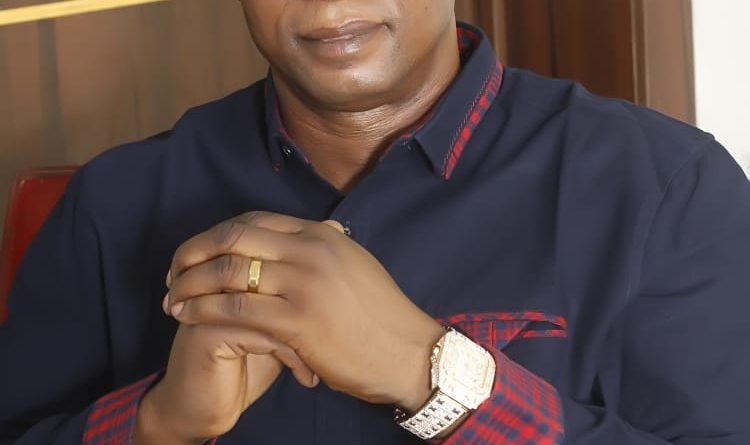
Mark Adebayo is an Abuja-based activist, author, politician, and consultant. He is the current national Spokesperson of the Coalition of United Political Parties, CUPP, and Convener of the New Direction for Nigeria Movement, NEDMO.