
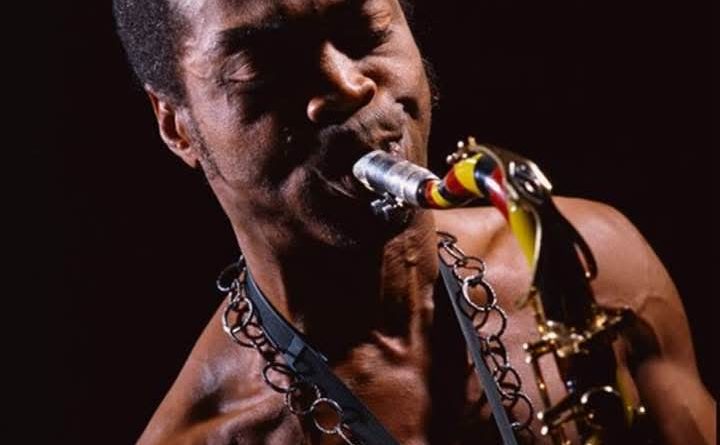
Fela Aníkúlápó Kuti And His Crowned Princes
By Prince Adeyemi Shonibare
Preface: The Necessity of Historical Context
Every generation seeks its heroes. In music, this instinct often manifests through comparison—an exercise that frequently reveals more about contemporary taste than historical contribution. In recent years, public discourse, amplified by social media, has juxtaposed Fela Aníkúlápó Kuti with global Afrobeats icons, most notably Wizkid, provoking the recurring question of “greatness” in Nigerian music.This essay does not diminish the accomplishments of Nigeria’s contemporary stars, whose global visibility is unprecedented. Rather, it offers a scholarly contextualization—one that distinguishes between musical origination and musical succession, and between cultural architecture and commercial dominance—while situating Fela Aníkúlápó Kuti firmly within the category of historical inevitability.
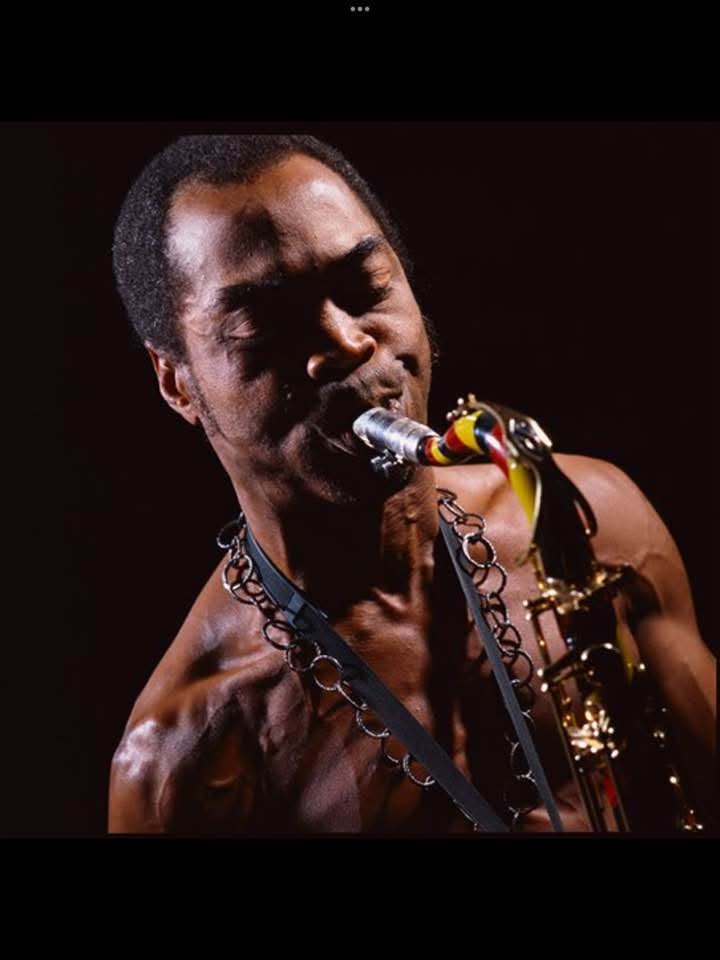
The Problem with Simplistic ComparisonComparing Fela Aníkúlápó Kuti with contemporary Afrobeats performers is, by scholarly standards, inherently flawed.Fela’s work transcended performance. He engineered an entire musical and ideological system, fused political philosophy with sound, and permanently altered the trajectory of African popular music. His output represents cultural authorship, not entertainment calibrated to market demand. Fela’s music is timeless precisely because it was never designed to be fashionable.
A Yoruba proverb captures this distinction with enduring clarity:
“Ọmọ kì í ní aṣọ púpọ̀ bí àgbà, kó ní akísà bí àgbà.”
A child may own many clothes, but he cannot possess the rags of an elder.The proverb is not dismissive. It is instructive. It speaks to accumulated depth—experience earned, systems built, and legacies forged through time rather than trend.
Musicians and Artistes: A Necessary Distinction
A rigorous analysis requires conceptual precision. Fela Aníkúlápó Kuti was a musician in the classical and intellectual sense: a composer, arranger, bandleader, employer of musicians, multi-instrumentalist, theorist, and cultural philosopher. His work demanded mastery of form, orchestration, ideology, and discipline.
Fela composed extended works, trained orchestras, performed entirely live, and embedded African political consciousness into rhythm, harmony, and structure.
By contrast, many contemporary stars—though exceptionally gifted and globally successful—operate primarily as artistes: interpreters of sound whose work prioritizes studio production, performance aesthetics, and commercial reach. This is not a hierarchy of worth, but a distinction of function. Fela’s music demanded study and confrontation; contemporary Afrobeats prioritised accessibility, pleasure, and global circulation—often without courting antagonism.
Afrobeat: An Ideological Invention
Afrobeat, as conceived by Fela, was not merely a genre. It was an ideological framework. Jazz, highlife, Yoruba rhythmic systems, call-and-response traditions, and political chant were fused into a resistant, uncompromising form.
Modern Afrobeats—by Wizkid, Burna Boy, and others—are adaptations and descendants, not replicas. They have expanded Africa’s global cultural footprint, but expansion does not erase origination. Fela’s Afrobeat remains the undiluted prototype upon which contemporary success rests.
Enduring Legacy Beyond Mortality
Fela Aníkúlápó Kuti passed in 1997, yet his influence has intensified rather than diminished. His legacy is evidenced by:
– Continuous academic study across global universities.
– International bands, many formed by people not alive at the time of his death, performing his works.
– FELABRATION, now a global annual cultural event.
– Broadway and international stage adaptations inspired by his life and music.
– Lifetime achievement and posthumous recognition by the Grammy Awards.– Cultural centres, festivals, and scholarly conferences generating lasting intellectual and economic value.This constitutes cultural permanence, not nostalgia.
Reconsidering Wealth and SacrificeMeasured monetarily, Fela was not among the wealthiest musicians of his era. His radicalism came at an immense personal cost. He was beaten repeatedly. His mother, Funmilayo Ransome-Kuti, was killed. His home was burned. Original artistic archives were destroyed during state-sanctioned violence by unknown soldiers, even though history records who authorised the actions.Yet Fela gave voice to generations—from Ojuelegba to Mushin, Ajegunle to Jos, Abuja, and even the privileged enclaves of today’s ọmọ baba olówó. He toured globally with an unusually large band long before satellite television or social media could amplify his reach.Like Wole Soyinka and Chinua Achebe, Fela’s wealth exists beyond currency. It resides in influence, citation, adaptation, and endurance.
National and Global Recognition
Fela received a state burial in Lagos—an extraordinary acknowledgment from a military government he relentlessly criticised. Nations rarely honour dissenters so formally.Globally, his stature aligns with figures such as James Brown, Elvis Presley, and the Rolling Stones—artists whose music reshaped identity, politics, and social consciousness.
The Crowned Princes: Wizkid and the Ethics of Reverence
Nigeria’s modern stars—Wizkid, Burna Boy, 2Face Idibia, Davido, Tiwa Savage, Tems, Olamide, among others—have achieved extraordinary global success. They are wealthier, more mobile, and more visible internationally than previous generations, and they deserve their accolades.
Wizkid, in particular, has consistently demonstrated reverence rather than rivalry toward Fela Aníkúlápó Kuti.Femi Aníkúlápó Kuti has publicly stated:“Wizkid loves Fela like a father.”Wizkid has repeatedly supported FELABRATION, never demanding performance fees. The only times he has not appeared were occasions when he was not in the country. He has remixed Fela’s music, bears a Fela tattoo on his arm, and openly acknowledges Fela’s primacy.
A senior associate and long-time friend of Wizkid has affirmed that Wizkid adores Fela, would never equate himself with him—“in this world or the next”—and that recent tensions were reactions to provocation rather than assertions of equivalence.
This distinction matters. Wizkid’s posture is one of inheritance, not competition.
Seun Kuti and the Burden of Legacy
Seun Kuti is a musician of conviction and lineage. Yet relevance is best secured through original contribution rather than reactive comparison. Fela’s legacy does not require defence through controversy; it is already settled by history.
As William Shakespeare observed:
“The fault, dear Brutus, is not in our stars,But in ourselves, that we are underlings.”—Julius Caesar
The weight of inheritance can inspire greatness or provoke restlessness. History rewards those who build upon legacy, not those who contest it.
The Songs That Made Fela Legendary
Among the works that cemented Fela’s immortality are:
– Zombie
– Water No Get Enemy
– Sorrow, Tears and Blood
– Coffin for Head of State
– Expensive Shit– Shakara
– Gentleman
– Teacher Don’t Teach Me Nonsense
– Roforofo Fight
– Beasts of No Nation
These compositions remain sonic textbooks of resistance.
Fela in the Digital Age
had Fela lived in the era of social media. His voice would have resonated far beyond Africa. His music would have found kinship among global movements confronting inequality, oppression, and social injustice.
“Music is the weapon.”—Fela Aníkúlápó Kuti
Weapons, unlike trends, endure.
Placing Greatness Correctly
Fela Aníkúlápó Kuti’s greatness does not require comparison. He is the great-grandfather of Afrobeat—the musical and cultural architect who cleared the roads upon which today’s Afrobeat princes now travel.Honouring contemporary success does not diminish historical achievement. To understand Nigerian music’s global relevance is to understand Fela. History, when read correctly, is both generous and precise.
Prince Adeyemi Shonibare writes on culture, music history, and African creative industries. He is a media and events consultant based in Nigeria.