Can Nigeria Survive Another Four Years Of Tinubu’s Torment? By Mark Adebayo
“If the government fails to change the lives of citizens, let the citizens change the government” – Hakainde Hichilema
To begin with, President Bola Tinubu can only ‘win’ the 2027 presidential election if the opposition allows him to. The strongest weapons at the disposal of the APC and Tinubu now are opposition indecisiveness, disorderliness, and centrifugal opportunism.
When General Muhammadu Buhari ran for president in 2015, he came in highly recommended, celebrated, and was the most popular candidate in that year’s election. The nation’s mood was for a “change” from Jonathan’s perceived “cluelessness” to a decisively progressive government that could turn the country’s dwindling fortunes around.
All over the country, the slogan “sai Baba, sai Buhari” was the common singsong and the rallying refrain of mass mobilisation and support for the General believed to be Nigeria’s Moses to lead Nigeria out of the dark tunnel to the oscillating brilliance of the Promised Land.
His spartan lifestyle, self-discipline, and alleged incorruptibility easily attracted Nigerians to this lanky Fulani man known to restore order when Nigeria was sinking under late President Shehu Usman Aliyu Shagari’s reckless administration in the mid-80s, and Buhari was installed as military head-of-state by his colleagues on December 31, 1983.
General Muhammadu Buhari, although draconian, quickly restored some sense of seriousness into the psyche of governance and stopped the country from collapsing under the weight of executive recklessness. Nigeria was sick, insolvent, and rapidly deteriorating. The military intervention of that era was incumbent, welcomed, and nationally celebrated.
He was seen as a hero who came to rescue Nigeria from the dangerous precipice that the politicians of that era had pushed it. The years 1979-1983 would remain among Nigeria’s most ignominous dispensation under a civilian rule. Nigeria and Nigerians suffered horribly. The government was corrupt, reckless, incompetent, and arrogantly indifferent to the citizens’ suffering. Exactly the same situation that we have today.
Buhari spent only 20 months in power before a palace coup led by General Ibrahim Badamasi Babangida toppled him on August 27th, 1985, the latter’s 44th birthday.
To a large extent, Buhari’s military junta reversed most of those ugly pictures and gave Nigerians a bit of breathable air. It was that seemingly impeccable record that was capitalized upon to railroad Nigerians into the second coming of Buhari that unfortunately proved to be an adventure into eight years of socioeconomic waterloo. We were sold a dummy. Buhari was no longer who he was, or who we thought he really was, back in 1984-85. The country paid dearly for our fallacious romanticizing with Buhari’s seemingly impeccable past.
But in 2023, most Nigerians were not without an adequate knowledge of who Bola Ahmed Tinubu was and what his presidency was likely to look like. We knew!
We knew about his multiple personalities – the controversies around his background, his parenthood, his childhood, his questionable educations, his alleged drug case in America, unresolved murder cases during his tenure as Lagos state Governor, the most prominent of which was the brazen murder of Funsho Williams, a popular governorship candidate, on July 27, 2006.
When Tinubu was Governor in Lagos state, it was among the dirtiest states, if not the dirtiest in Nigeria. Oshodi was like a refugee camp that his predecessor, Raji Fashola, SAN, had to more or less Eldoradorized. The Oshodi incredible transformation under Governor Fashola was a postmodernist wonder of the world. Road infrastructure was an abandoned project in Lagos. That also had to be fixed, to a large extent, by Fashola. A regime of thuggery by commercial motorists who are constantly used for election violence was established and subsists till date in Lagos state. Allegations of the crudest forms of corruption during his stewardship as Lagos state Governor have refused to subside. There are lots of unanswered questions as to how he came about his humongous wealth after eight years as Governor compared to when he went in. The list is virtually endless!
All these were prominently on the front burner of public discourses before, during, and after the 2023 general elections, yet Tinubu ‘won’ the election.
President Tinubu’s antecedents are the reasons why many of us are not surprised by the unprecedented suffering that immediately greeted his presidency from 2023. He hadn’t even left the Eagle Square where he was sworn in when excruciating economic overloads were unleashed on Nigerians via the precipitate cancelation of the fuel subsidy that was already catered for in the 2023 budget.
Ravaging insecurity that has cost thousands of lives, and still festering, followed pari passu. The administration’s lack of understanding and lack of will thereof to set the country on the path of a comprehensive national development and socioeconomic stability continue to render Nigeria a rapidly failing state that is only hanging by the threads.
The humongous debts portfolio being accrued by the country which, at the last count, stood at about 152 trillion Naira (approx. US$100 billion) with the potential for continuous borrowing threaten to sink Nigeria in the slimy ocean of domestic and external debts with the highest debt-service-to-revenue ratio ever!
Nigerians have been experiencing unprecedented hardship from day one of Tinubu’s administration as over 46% of Nigerians have consistently lived below the poverty line since May, 2023, with food inflation leaving many barely surviving as they spend approximately 85% of their income on food only.
Despite modest military successes, mass abductions and terrorist activities remain disturbingly high across the country. Any government’s mandate is weakened by its inability to protect its country’s citizens.
Nigeria is in a very bad shape, and everyone can see it. Elizabeth Warren once said that the power of the people is stronger than those in power. However, the people require leadership in order to aggregate the total gamut of their powers to trigger the immutable process of mass action against bad governance via an electoral revolution through the ballot. This assignment is the sole and solemn obligation of an opposition that is alive to its responsibilities.
All the conditions that make for an incumbent to be roundly defeated in an election are fully ripe in Nigeria, but is the Nigerian opposition ready to pick up the gauntlet for such a historic task? It is factual that an ineffective opposition is often characterized by silence, lack of strategy, and an over-reliance on hope rather than action.
Nigeria has never been this misruled. All sociopolitical and economic indicators point to the fact that Tinubu’s administration is one huge machinery of governance disaster for this country that is due to be sacked by Nigerians. But is the opposition ready?
The Nigerian opposition hemorrhages internally in a dangerous way consequent upon which it is unable to collaborate for a united assault against the political armada of the APC that is arguably formidable but definitely vincible.
With all the Governors and other political heavyweights it has amassed into its fold, the APC is still afraid. It knows that its governance records are worse than abysmal. But the opposition isn’t taking advantage of it in a way that aggressively diminishes the capacity of the ruling Party to get away with all the atrocities it is committing against Nigerians. The APC is working relentlessly to turn Nigeria into a one-Party state and it is preparing harder to win the 2027 general elections whilst the opposition is still faltering and trudging about without a clear-cut direction.
If the opposition comes together and pool resources to support one candidate and mobilize Nigerians en mas in his/her support, Tinubu and his APC will suffer a devastating defeat. But, nobody wants to sacrifice ambition for national interest. The opposition parades credible presidential materials who can send Tinubu packing from Aso Rock, but there is a damaging strategy deficiency syndrome.
Apart from Peter Obi who is arguably the most popular presidential aspirant in today’s Nigeria, there are other presidential materials in the various political Parties among of whom one can be picked and supported to win the next presidential election. Unfortunately, we haven’t even started scratching the surface in terms of preparations. Whilst the ruling Party is busy daily recruiting Nigerians through online and offline massive membership registration, rallies, and propaganda, the opposition is still groping in the dark and annoyingly indecisive in terms direct actions to counter Tinubu’s rigging machine.
I’m not an Obedient, but it is a general knowledge that Peter Obi has the edge over all other opposition candidates when it comes to acceptability and popularity among Nigerians. Anywhere in this country, North, West, South or East, either among Christians, Muslims, or animists alike, Peter Obi is always given a hero’s welcome.
I know that there are other presidential hopefuls of credible personality, integrity, and undoubted patriotism, but except otherwise happens later, Peter Obi remains a formidable political asset that the opposition can rally around and support to vote this horrible government voted out in 2027.
There are too many pretenders aspiring to be Nigeria’s president. Some are genuinely serious but acutely naive. They are off the board. Some are mere wannabes without any significant focus but just playing to the gallery. They are also off the board.
Some presidential aspirants are mere proxies planted inside political Parties just to hold the Parties down, make sure they win the Parties’ presidential tickets and pretend to be contenders but do nothing serious by way of electioneering in the lead up to the election with a view to conveniently losing the election. Their assignment is simple. Ensure that no formidable candidate that could compete favorably with the incumbent emerges as presidential candidates in those political Parties. They are mere mountebanks playing a dangerous game with the sensibilities of Nigerians. They are agents of retrogression pretending to be the country’s ‘redeemers’ but actively working hand in glove with the people’s oppressors to destroy our democracy and the integrity of our elections. They are also off the board.
Any opposition presidential aspirant with questionable baggages and antecedents as a public official in one capacity or the other is also off the table.
The opposition must immediately engage in sophisticated and strategic propaganda to counter the humongous and effective propaganda machine of the APC if we hope to make any significant headways. Nigerians must begin to see our determination, commitment, and capacity to checkmate the APC armada, humble it at the next series of election and rescue Nigeria from avoidable collateral tragedy that could end up spelling the death knell for our beloved country.
The opposition is failing the people as much as the government is. There is a major disconnect from the people. Rather than engaging in mass awareness campaigns to educate the people on the many failings of this government, the opposition is merely having conversations among the elites that even hardly vote. Rather than holding towhnalls with the people at a consistent pace, the opposition is too perfunctory in its attitudes to opposition activism.
A major lacunae, which I believe the ruling Party has also noticed, is the lack of common ground among opposition actors which I alluded to earlier. The popular opposition figure in Uganda who is a former military officer of the rank of a Colonel, Dr. Kizza Besigye, at the height of his popularity while still a strong opposition presidential candidate against dictator Yoweri Kaguta Museveni who has ruled Uganda for 40 years, decided to step down his presidential ambition to support a younger and fast rising opposition star, 43-year old Robert Kyagulanyi Ssetamu, fondly called Bobi Wine.
That concession made by Kizza Besigye to Bobi Wine before being thrown into illegal detention for a phantom treason allegation, gave the Ugandan opposition a great traction. The result was a massive support base for just one opposition candidate who drew massive crowds wherever he went during the electioneering campaigns and massive votes during the election proper. Although dictator Museveni still rigged the election, but local and international observers reached the consensus that Bobi Wine won the January 15, 2026 presidential election by at least 70%. That is the power of coming together and queueing up behind one candidate. Eventually, the Ugandan people will still defeat the Ugandan dictator because majority of the Ugandan citizens see Museveni as an illegitimate president lording himself over them and Bobi Wine as their real president.
The same scenario played out in the Senegalese presidential election held on March 24, 2024, that was won by 45-year-old Bassirou Diomaye Faye. He was successfully sworn in on April 2, 2024 despite the initial hiccups orchestrated by the incumbent to truncate his victory like Museveni has been doing in Uganda.
The Nigerian opposition needs to market itself sufficiently to Nigerians and expose the damaging failings of the APC administration through tactical propaganda. The opposition is currently too lackadaisical and unstrategic for my liking. Nigeria may not survive a Tinubu’s second term because the suffering could become so unbearable for the citizens and the institutions of the state. If the opposition continues to procrastinate and acting irresolute, that’s exactly what’s going to happen.
The Nigerian opposition needs to learn from Margaret Mead’s statement that “Never doubt that a small group of thoughtful, committed citizens can change the world. Indeed, it is the only thing that ever has.”
The Nigerian opposition can change the Nigerian narrative from that of a failing state to a rising one by playing the power game pragmatically, beat the rigging machine, and win the 2027 elections.
Plato warned that ignoring government affairs by those who know better leads to rule by fools. I rest my case.
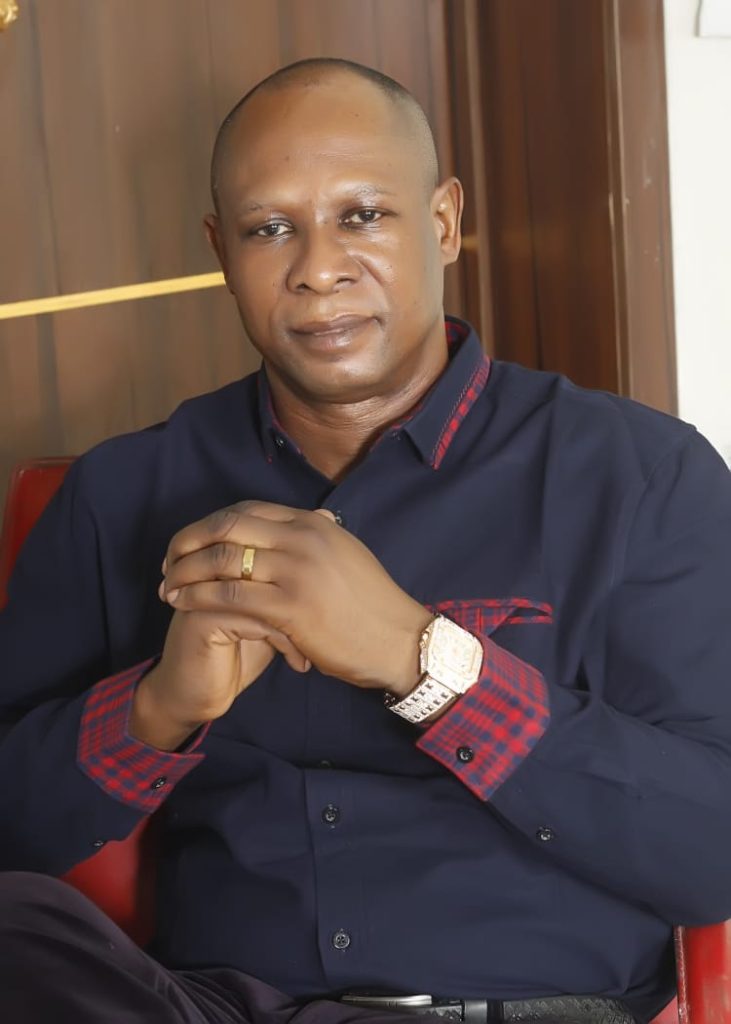
Mark Adebayo is a Nigerian civil rights activist, columnist, published author, and strategy consultant. He is the Convener of the New Direction for Nigeria Movement, NEDMO, and National Spokesperson for the Coalition of United Political Parties, CUPP.