FG’s Inter-Agency Committee Lists Cross River As Oil-Producing State
Federal Government’s Inter-Agency Committee on Nigeria’s Oil-Producing States has projected Cross River as oil-producing when it formally submitted report to the Revenue Mobilization, Allocation and Fiscal Commission (RMAFC) at the weekend.
The submission may put an end to the controversy that has persisted over the years and may become the economic renaissance for Cross River state.
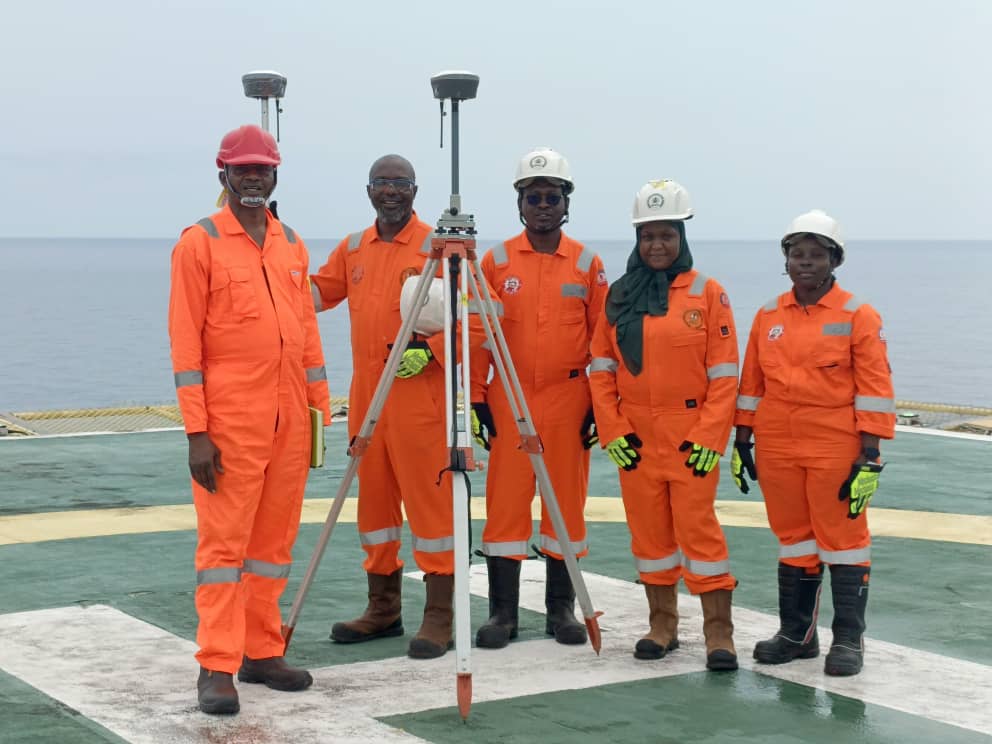
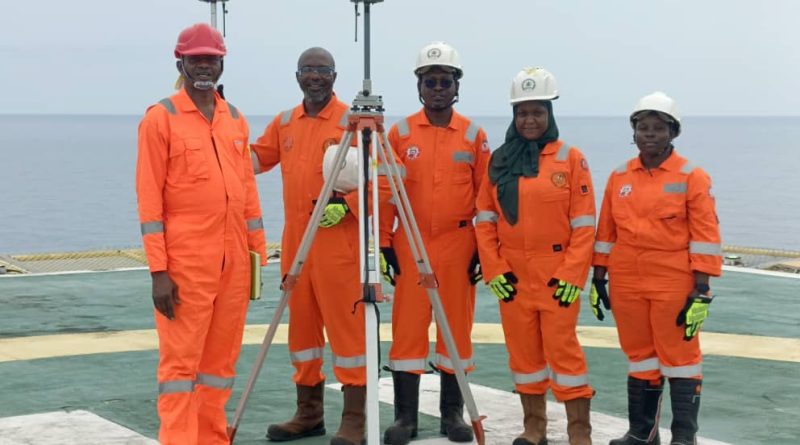
The report, covering the 2017–2025 nationwide verification of crude oil and gas coordinates, was presented to the Chairman of RMAFC, Mr. M. B. Shehu, by 10 members of the 14-man committee. The exercise, which ran from August 2025 to February 2026, involved extensive field verification, technical reconciliation of state submissions, and a final plenary plotting of coordinates at RMAFC headquarters between January 24 and 31, 2026. An independent media source monitoring proceedings at the Chairman’s office confirmed the submission and described it as “the most comprehensive coordinate verification undertaken in recent years.”
Commending the committee, Mr. Shehu reportedly described the assignment as “rigorous, technical and nationally significant,” adding that the painstaking verification of over 1,000 crude oil and gas coordinates across Nigeria demonstrated the Federal Government’s commitment to transparency and accuracy in revenue attribution.
“This was not a desk exercise. It involved physical verification, hydrographic validation, boundary reconciliation and security-backed confirmations across multiple states,” he said.
The committee comprised representatives from RMAFC, the National Boundary Commission (NBC), the Office of the Surveyor-General of the Federation (OSGoF), the Nigerian Upstream Petroleum Regulatory Commission (NUPRC), the Office of the Secretary to the Government of the Federation (SGF), the Nigerian Hydrographic Agency, and relevant security agencies. Their mandate was clear: scientifically determine the precise location of oil and gas assets within Nigeria’s onshore and offshore boundaries.
Over a six-month period, the team visited more than 12 states, including Akwa Ibom, Rivers, Bayelsa, Delta, Edo, Ondo, Imo, Anambra, Abia and Cross River. In the process, the committee verified over 1,000 new crude oil and gas coordinates based on confirmed onshore and offshore reservoir data. Findings from the report indicate that nearly all oil-producing states stand to benefit from new oil well attributions arising from the verified coordinates.
Several longstanding boundary overlaps were resolved through shared attributions, including Rivers–Akwa Ibom, Delta–Edo, Delta–Ondo, Imo–Rivers, Imo–Anambra and Akwa Ibom–Cross River. Sources familiar with the deliberations disclosed that “where geological reservoirs straddle boundaries, equity and technical evidence guided shared attributions rather than political considerations.”
Significantly for Cross River, technical projections in the report place the state in a strong position to regain oil-producing status with more than 100 producing oil wells from verified onshore and offshore reservoir coordinates, particularly from OML 114 located within its maritime territory.
For the first time since 2008, Cross River is projected to be officially enlisted again as an oil-producing state, a development widely seen as vindication of years of advocacy and scientific revalidation.
The RMAFC Chairman is expecting President Bola Tinubu’s assent for implementation of the Inter Agency Technical Committee (IATC). Upon presidential approval for implementation, the RMAFC Board of Commissioners will convene a plenary session to approve the operational framework for implementing the new attributions and updating Nigeria’s official list of oil-producing states.