
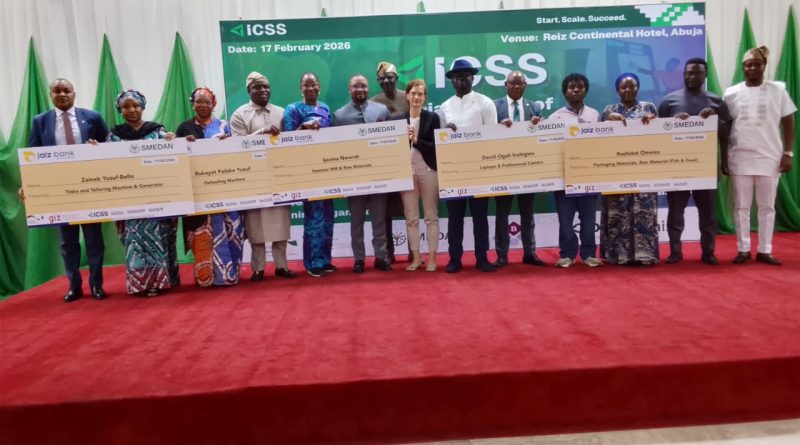
FG Launches Single-Digit Loan Scheme To Empower 6,122 Nigerian Entrepreneurs
By Bukar BOLORI
The Federal Government has unveiled a landmark financing programme aimed at transforming Nigeria’s entrepreneurial landscape by providing 6,122 Micro, Small, and Medium Enterprises (MSMEs) with access to single-digit interest loans under the SMEDAN Inspire–Create–Start–Scale (ICSS) programme.
Launched in Abuja on Tuesday, the initiative is a collaboration between the Small and Medium Enterprises Development Agency of Nigeria (SMEDAN), Deutsche Gesellschaft für Internationale Zusammenarbeit (GIZ), and Kaduna Business School, with implementation support from GOPA Worldwide Consultants.
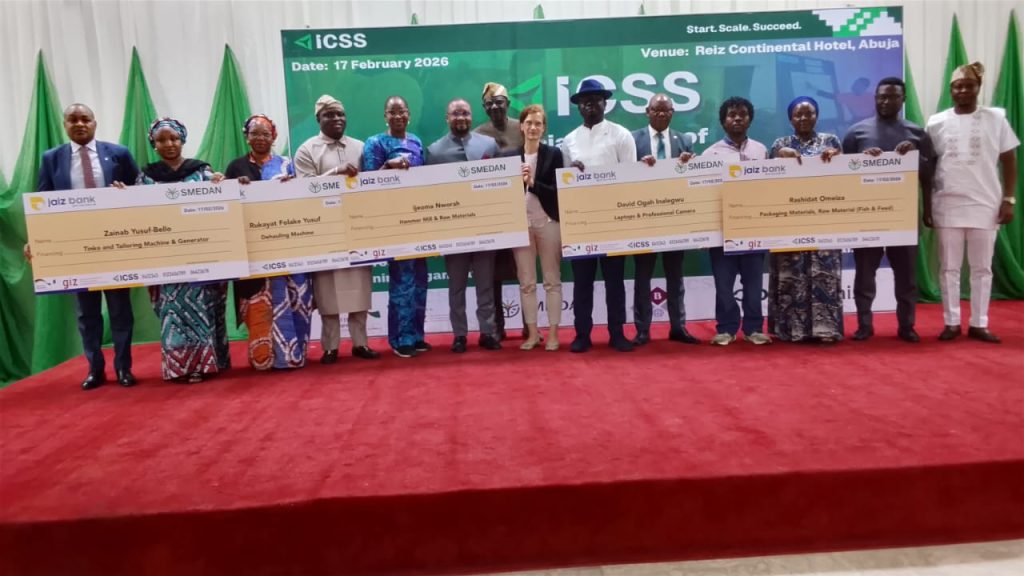
The loan facility will be managed by Jaiz Bank, offering START loans ranging from ₦250,000 to ₦2 million, and SCALE loans between ₦1 million and ₦5 million.
Minister of Youth Development, Ayodele Olawande, highlighted access to finance as a major barrier to entrepreneurship in Nigeria, particularly for youth and underserved communities.
He said the programme is not charity, but a deliberate investment in productivity and sustainable economic growth.
“Training alone is not enough. We must pair it with mentorship, financing, and market access to ensure young entrepreneurs can transform ideas into thriving businesses,” Olawande said.
He identified green growth, digital transformation, and practical skills development as key priorities for preparing Nigerian youth for today’s economy.
SMEDAN Director-General, Charles Odii, said the ICSS programme standardises entrepreneurship training to meet global best practices, making participants bankable and investment-ready.
“Many MSMEs have undergone training in the past but could not access funding. ICSS now ensures that every graduate with a viable business plan can immediately qualify for financing,” Odii explained.
He added that the loans are intended to support productive assets such as machinery, tools, and equipment to scale operations and generate employment.
Odii confirmed that while 100 entrepreneurs are benefiting in the pilot phase, the broader target is 6,122 graduates nationwide, with women and youth-led enterprises given priority.
Head of Development Cooperation at the German Embassy, Dr. Karen Jansen, emphasised Germany’s commitment to strengthening Nigeria’s MSME ecosystem.
She described the ICSS programme as a sustainable model, integrating training, mentorship, and responsible financing to reduce lender risk while promoting long-term business growth.
Rukayat Yusuf, a beneficiary specialising in natural cosmetics and agro-processing for export, described the initiative as transformative.
“This facility will allow women entrepreneurs like me to scale production, reach new markets, and strengthen our competitiveness locally and internationally,” she said.
The launch drew participation from government officials, development partners, financial institutions, and private sector leaders, signalling a concerted push to empower Nigerian youth and SMEs to drive economic growth.