Zulum Unveils Infrastructure Push As World Bank Reaffirms Development Support For Borno
By Bukar BOLORI
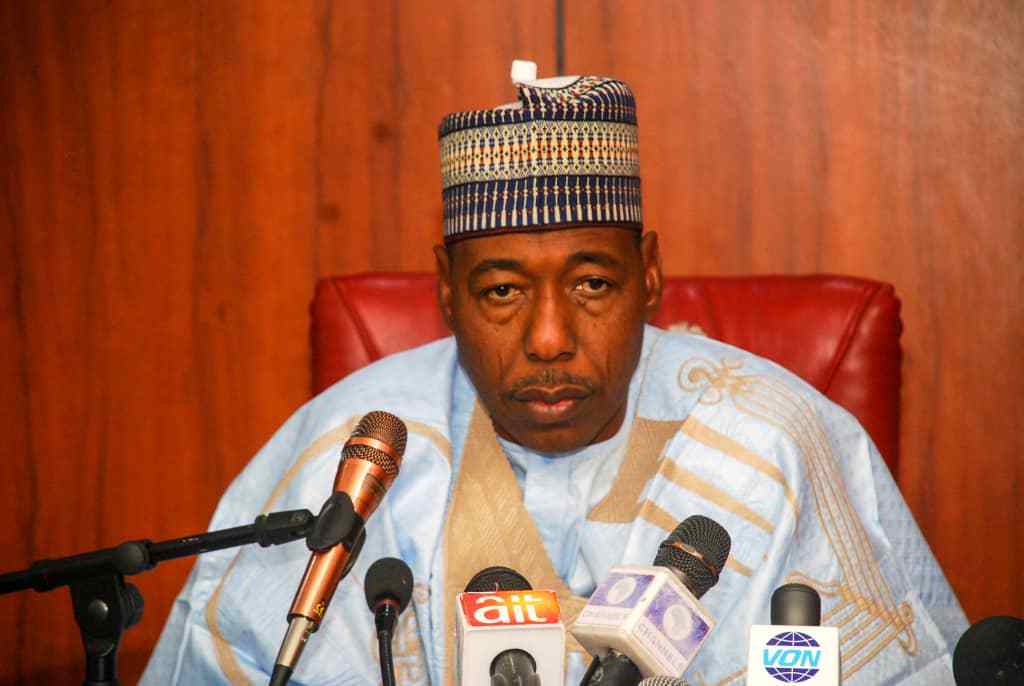
Borno State Governor, Prof. Babagana Zulum has reiterated his administration’s commitment to post-conflict reconstruction and sustainable development following the commissioning of multiple infrastructure and education projects across the state, amid growing international development partnerships.
The projects were formally inaugurated by the Nigeria Country Director of the World Bank, Dr. Mathew Verghis, who described the investments as critical milestones in strengthening human capital development and economic resilience in regions recovering from insurgency.
Verghis praised the Borno State Government for prioritising education and infrastructure as pillars of recovery, noting that long-term stability in conflict-affected regions depends largely on access to quality education, functional infrastructure, and inclusive economic opportunities.
The newly inaugurated facilities include three modern mega schools designed to expand access to quality learning for children in vulnerable communities, as well as major road infrastructure projects aimed at easing movement within Maiduguri metropolis.
The educational facilities include the Government Secondary School Mainusari, the Mega Primary School Maimusari, and the Command Secondary School Maiduguri, all equipped with modern classrooms, learning materials, and student support facilities.
The infrastructure component of the project covers the West End flyover bridge and three major dual carriageway roads spanning Sultan Mainalari, Bursari, and Shehu Sanda Kura corridors.
State officials say the roads will improve traffic flow, boost commerce, and enhance security surveillance within the city.
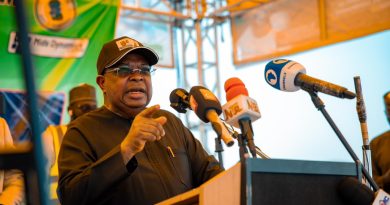
Speaking at the commissioning ceremony, Zulum said his administration is deliberately investing in education as a strategic tool for social transformation.
He explained that decades of insurgency had severely damaged school infrastructure and disrupted learning for millions of children.
He disclosed that more than 5,000 classrooms were destroyed during the conflict, displacing thousands of students.
To address the challenge, the state government has embarked on massive reconstruction efforts, building new schools while rehabilitating damaged facilities across rural and urban communities.
The governor also highlighted several social intervention programmes aimed at supporting students’ retention in school. These include the distribution of millions of exercise books and textbooks, provision of school uniforms and learning bags, and the expansion of school feeding programmes targeting thousands of pupils annually.
Zulum further stated that vocational and technical education has been prioritised to address youth unemployment.
According to him, the state has established multiple vocational training institutes and entrepreneurship schools for women and youth, designed to promote skills acquisition and small business development.
Community leaders, education stakeholders, and development partners attending the event described the projects as a confidence-building step for displaced communities gradually returning to normal life after years of instability.
Observers say the growing partnership between Borno State and international development organisations signals stronger support for recovery, governance reforms, and sustainable growth in the North-East region.