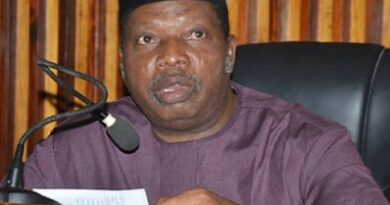

Obasanjo Unveils Bold Blueprint For Africa’s Security Overhaul, Warns Against New Scramble
By Bukar BOLORI
Former Nigerian President Olusegun Obasanjo has issued a sweeping and urgent call for a radical overhaul of Africa’s security architecture, warning that the continent risks deeper instability and renewed external domination unless it urgently redefines its approach to security, governance, and intelligence.
Speaking at the third Mashariki Cooperation Conference III (MCC III), Obasanjo challenged Africa’s intelligence chiefs and security leaders to abandon outdated frameworks and embrace a people-focused, technologically independent, and accountable system capable of confronting modern threats.
Delivering a hard-hitting address on “Emerging Geopolitical Dynamics and Africa’s Security Architecture,” the elder statesman argued that Africa’s persistent conflicts are not accidental but stem from “specific, identifiable failures of leadership,” compounded by what he described as intensifying external manipulation.
“We are witnessing the fracturing of the post-1945 multilateral order,” Obasanjo said, pointing to the global fallout from the Russian invasion of Ukraine and contrasting international responses to crises in regions such as Gaza and the Sahel.
According to him, these inconsistencies expose a global system that applies its rules selectively—often at Africa’s expense.
A Continent Under Pressure
Obasanjo painted a stark picture of a continent caught in a renewed geopolitical contest, warning of a “new scramble for Africa.”
He cited expanding foreign influence through initiatives like China’s Belt and Road Initiative, the growing footprint of Russian-linked security actors across the Sahel and the Horn of Africa, and the vacuum left by the withdrawal of Western forces from key conflict zones.
These developments, he said, have coincided with a surge in terrorism, violent extremism, and an alarming wave of military takeovers across the continent since 2020—what he described as a “coup epidemic.”
Five Pillars for a New Security Order
In response, Obasanjo outlined five concrete propositions aimed at reshaping Africa’s security framework:
• Human-centred security: Prioritising the safety and welfare of citizens over elite interests.
• Continental solidarity: Strengthening joint mechanisms such as the African Standby Force and early warning systems.
• Disrupting illicit financing: Empowering intelligence agencies to tackle financial flows that sustain insecurity.
• Technological sovereignty: Building African capacity in artificial intelligence, cyber defence, and drone warfare.
• Accountable governance: Establishing transparent leadership as the foundation of lasting security.
He stressed that without credible governance, no military or intelligence strategy can succeed.
Intelligence at the Core
Central to Obasanjo’s message was a forceful critique of Africa’s use of intelligence.
He described intelligence as “indispensable to conflict prevention” but “woefully underused,” citing missed warning signs in past crises across Liberia, Sierra Leone, Burundi, the Democratic Republic of Congo, and Sudan.
He urged the creation of a truly integrated continental intelligence network, beginning with stronger regional cooperation, and insisted that effectiveness must be anchored in professionalism and civilian oversight.
“Intelligence services that operate with integrity… and are subordinate to civilian authority are not weaker—they are stronger,” he declared.
Leadership Under Scrutiny
In a rare moment of reflection, Obasanjo drew from his own involvement in major African peace efforts, including Nigeria-led interventions under ECOMOG in Liberia and Sierra Leone, and mediation roles in Burundi and Zimbabwe.
He argued that successful conflict resolution has always depended on “accurate intelligence, courageous honesty, and selfless leadership.”
He also introduced his “Obasanjo 55+20 Leadership Framework,” a structured model outlining 55 measurable leadership attributes and 20 core values.
At its heart, he said, lies “courageous honesty”—the willingness of leaders to confront uncomfortable truths.
A Final Warning
Addressing an audience that included Noordin Mohamed Haji and intelligence heads from across Africa, Obasanjo closed with a stark warning and a challenge.
At nearly 90, he said his decades of experience have shown both Africa’s promise and its recurring failures.“Africa’s conflicts are not inevitable,” he said.
“They are the product of leadership choices. What is required now is the will—and the courage and audacity—to choose differently.”
His message was unmistakable: without decisive reforms, Africa risks remaining a battleground for external powers; with them, it has a chance to secure its future on its own terms.