Hunger, Conflict, Disease Push Northern Nigeria Toward Humanitarian Breaking Point — MSF
By Bukar BOLORI
International medical humanitarian organisation, Médecins Sans Frontières, has raised fresh alarm over what it described as a deepening humanitarian catastrophe in Nigeria, warning that worsening hunger, disease outbreaks and insecurity are driving thousands of vulnerable families — especially children — toward death and despair.
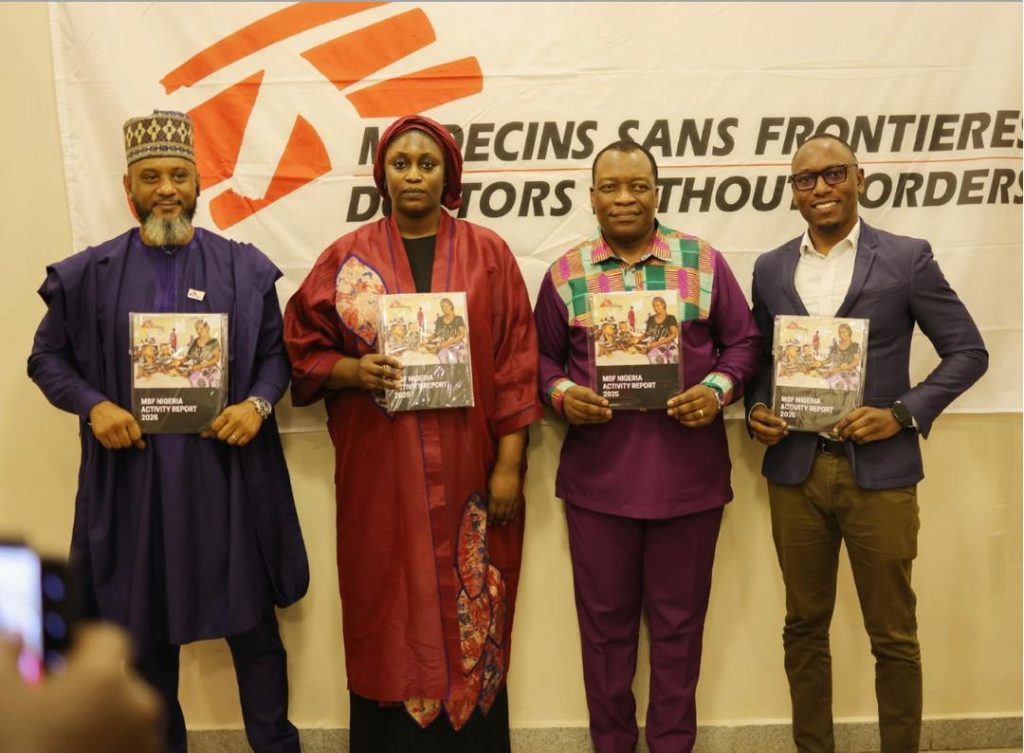
In its 2025 Nigeria Country Report of Activities, the organisation painted a troubling picture of overstretched hospitals, rising cases of severe acute malnutrition and communities trapped between poverty and violent conflict, particularly across northern Nigeria.
The report revealed that hundreds of thousands of children are now battling life-threatening malnutrition in a country that remains Africa’s largest economy, exposing what humanitarian workers described as the widening gap between economic realities and human survival.
According to MSF, more than 250,000 severely malnourished children were treated in outpatient facilities in 2024, while over 76,000 children suffering dangerous complications linked to malnutrition required emergency hospital admission.
The organisation warned that the crisis is no longer seasonal or temporary but has evolved into a chronic humanitarian emergency fuelled by inflation, displacement, insecurity and collapsing access to healthcare.
“Malnutrition is no longer just an emergency during the lean season,” the organisation noted in the report.
“For many families, it has become a permanent condition of survival.”
In states across the Northwest and Northeast, medical facilities supported by MSF are reportedly struggling under the weight of increasing admissions linked to severe hunger, measles, malaria and respiratory infections.
The situation in Bauchi State reflects the scale of the emergency. Between January and April 2025 alone, nearly 28,000 malnourished children were treated — a dramatic increase compared to the same period last year.
MSF also highlighted the deadly combination of malaria and malnutrition in Kano and surrounding states, warning that both conditions are reinforcing each other and placing children at even greater risk of death.
The humanitarian organisation said many parents now arrive at treatment centres after exhausting every coping mechanism, including skipping meals, selling possessions and withdrawing children from school.
Beyond hunger, the report drew attention to the impact of insecurity on healthcare delivery, especially in conflict-affected communities where violence, displacement and fear continue to cut millions off from medical services.
In several communities, MSF teams reportedly operated in fragile environments where healthcare workers face enormous logistical and security challenges while attempting to respond to disease outbreaks and medical emergencies.
The organisation also reflected on its long-running intervention against Lassa fever in Ebonyi State, where it supported treatment, laboratory systems and emergency preparedness before formally transferring responsibilities to local authorities this year.
Despite these interventions, MSF warned that humanitarian needs across Nigeria are expanding faster than available resources.
The report called for urgent and sustained investment in nutrition, primary healthcare, disease surveillance and protection for vulnerable populations, warning that failure to act decisively could worsen an already fragile humanitarian situation.
For many observers, the report represents more than a medical assessment — it is an indictment of the harsh realities confronting millions of Nigerians who remain trapped between economic hardship, insecurity and inadequate access to basic healthcare.