Kila Urges Nigerian Universities To Recruit Aggressively Across Commonwealth Countries
Offers Strategic Framework and International Network for Success at the Commonwealth University Leaders Conference
Prof Anthony Kila, a Commonwealth Institute Director and Professor of Strategy and Development, has urged Nigerian universities to aggressively pursue international student recruitment across Commonwealth countries, describing global education as one of the most strategic and underutilised opportunities for revenue and influence available to higher institutions in Nigeria today.
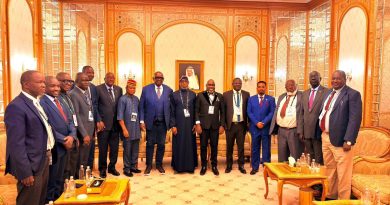
The Don made the call during a strategic presentation at the recently concluded Commonwealth University Leaders Conference, where university leaders, education strategists, policymakers and institutional administrators gathered to discuss funding, leadership and sustainability in higher education.
Speaking on the theme of “International Student Recruitment as a Source of Extra and Foreign Revenue Generation”, Kila argued that Nigerian universities must begin to view international education not merely as an admissions activity but as a strategic industry tied to economics, diplomacy, reputation and institutional survival in the twenty-first century.
According to him, universities worldwide now compete internationally for students, partnerships, visibility and financial sustainability, while Nigerian universities continue to underperform in a sector where the country already has significant natural advantages.
“Nigerian universities already possess many strategic advantages,” Kila explained.
“We are an English-speaking country with strong intellectual traditions, global cultural visibility through music and film, relatively affordable tuition, and an existing reputation across parts of Africa. The question is whether we are prepared to organise ourselves strategically enough to compete globally.”
Kila identified Commonwealth countries across Africa and the Caribbean as immediate recruitment opportunities for Nigerian universities, specifically mentioning Ghana, Sierra Leone, Liberia, Gambia, Kenya, Rwanda, Jamaica, Trinidad and Tobago, Barbados and Guyana.
He also highlighted opportunities in India, Pakistan, the Middle East and among African diaspora communities in Europe and North America.
He argued that Nigerian universities can attract international students in areas where the country has strong academic and cultural relevance, including African Studies, Governance and Diplomacy, Political Economy, FinTech, Entrepreneurship, Public and Tropical Health, Religion and Society, Nollywood, Afrobeat and Creative Arts.
Kila, however, warned that many Nigerian universities remain structurally unprepared for internationalisation due to weak branding, poor digital visibility, outdated application systems, inconsistent academic calendars, and underdeveloped support for international students.
“International recruitment is about perception as much as about education,” he said.
“Students choose universities for reputation, safety, stability, administrative efficiency and confidence. Universities that are invisible online cannot recruit globally.”
As part of the conference presentation, Kila proposed a practical framework for Nigerian universities seeking to internationalise intelligently. The recommendations included upgrading institutional websites, establishing dedicated international offices, improving response times to enquiries, attending international recruitment fairs, strengthening alumni networks abroad, developing digital recruitment systems, and investing in branding and visibility.
He also emphasised the importance of leadership commitment, urging vice-chancellors and university administrators to treat internationalisation as a core institutional strategy rather than a peripheral one.
Importantly, Kila announced that institutions participating in the Commonwealth academic network would be able to benefit from collaborative support structures, partnerships and recruitment opportunities through the Commonwealth Collegium framework.
According to him, the network can facilitate partnerships across Commonwealth countries, support recruitment missions, create shared recruitment platforms, strengthen quality assurance dialogue and promote student mobility agreements.
He further noted that international students generate value beyond tuition fees, contributing to accommodation revenue, hospitality services, executive education opportunities, conferences, tourism, and long-term alumni networks that strengthen institutional influence globally.
Kila concluded by stressing that universities that internationalise intelligently will become not only financially stronger but also more relevant, resilient and globally influential.
“International recruitment is more than admissions,” he said.
“It is an economic, institutional, reputational, soft-power and development strategy.”