
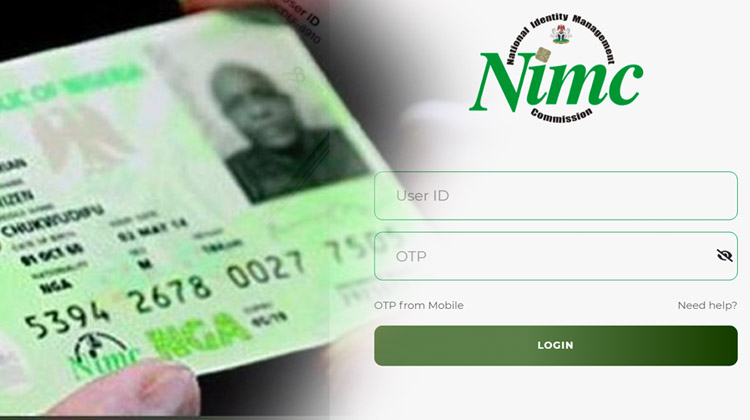
MY OBSERVATORY The NIMC Act 2026: Building Nigeria’s Digital Nation On A Single Identity
By Sola Fanawopo
The unveiling of the National Identity Management Commission (NIMC) Act 2026 marks one of the most ambitious digital governance reforms since Nigeria embraced electronic banking and digital public services. Its philosophy is simple but profound: *One Person, One Identity, One Number.
This is not merely another amendment to an existing law. It is a systematic attempt to redefine how Nigerians interact with government agencies, financial institutions, healthcare providers, educational institutions, and virtually every public service through a unified digital identity framework.
If implemented faithfully, the Act could become the infrastructure backbone of Nigeria’s digital economy. If poorly executed, however, it could expose millions of Nigerians to unprecedented cybersecurity and privacy risks.
Digital Identity Is the New National Infrastructure
In the 20th century, forward-thinking nations invested heavily in roads, bridges, railways, and airports. In the 21st century, digital identity has become just as critical. Countries like Estonia, India, Singapore, and the United Arab Emirates have demonstrated that a secure digital identity system dramatically improves governance, expands financial inclusion, and enhances overall economic productivity.
Nigeria appears determined to follow that path.Making the National Identification Number (NIN) strictly compulsory for banking, passport issuance, taxation, pensions, land administration, and government social programmes creates a single, trusted “source of truth.”
Crucially, it also eliminates the costly and redundant duplication of identity databases across separate ministries, agencies, and private entities.
Fighting Identity Fraud With Teeth
Perhaps the most striking provision of the Act is the introduction of significantly tougher sanctions for identity theft and unauthorized database access. The law now levies corporate fines of up to ₦20 million and mandates a minimum prison sentence of five years for individuals found guilty of impersonation or fraudulent multiple registrations.
Nigeria’s digital economy has suffered immense financial and reputational damage from identity-related crimes, ranging from SIM registration fraud and bank account impersonation to forged official documents and cyber-enabled financial crimes. These upgraded penalties send a clear message: personal identity is now classified as critical national infrastructure deserving the highest level of legal protection.
The Enforcement Challenge:
Punishment alone will not defeat cybercriminals. The true test of these legal teeth will depend entirely on modernizing our digital forensic capabilities, training specialized cyber-prosecutors, and ensuring the efficiency of our courts.
The Non-Negotiables: Privacy and Integration
1. Consent-Based Privacy
One encouraging aspect of the Act is its explicit emphasis on consent-based access to personal information. By structurally aligning with the Nigeria Data Protection Act framework, the legislation attempts to reassure citizens that their biometric and personal information cannot be accessed arbitrarily by state or private actors.Still, public trust is earned through consistent implementation, not legislative text. The true milestone will be whether government networks comply with strict data protection standards and whether everyday citizens can genuinely audit who accesses their data.
2. One Card, Multiple Possibilities
The proposed General Multipurpose Card has the potential to simplify everyday citizen life. Imagine carrying a single credential that seamlessly integrates your:
National identity & biometric data
Banking and financial verification
Health insurance identification
Pension access portal
Driver’s license authentication
Secure digital signature
While such tight integration drastically reduces bureaucratic red tape, saves public funds, and enhances daily convenience, centralization introduces massive systemic vulnerabilities. When one key opens every digital door, protecting that key becomes a matter of top-tier national security.
Nigeria must therefore invest aggressively in advanced encryption, multi-factor biometric authentication, zero-trust network architecture, and rapid incident response teams.
Inclusion as the Real Success Indicator
The ultimate promise of the Act lies in its commitment to ensuring that every Nigerian, including those in remote rural communities, marginalized populations, and citizens living in the diaspora, has seamless access to a legal identity.
Digital inclusion is no longer a luxury; it is an economic necessity. Without a verified identity, millions remain locked out of modern banking, formal healthcare, higher education, insurance, and targeted government intervention programs.
The Cybersecurity Imperative
As Nigeria builds one of Africa’s largest unified digital identity databases, the NIMC core infrastructure automatically becomes a primary target for sophisticated cybercriminals and hostile actors. Safeguarding this database requires sustained, non-negotiable investment in:
AI-driven real-time threat detection
Mandatory, independent security and penetration audits
Robust, geographically distributed disaster recovery systems
Sustained training pipelines for domestic cybersecurity professionals
Beyond Technology
Ultimately, technology alone cannot guarantee a policy victory. Reliable electricity, nationwide broadband connectivity, highly trained public personnel, aggressive public awareness campaigns, and transparent institutional governance will determine whether this reform actually succeeds on the ground.
The NIMC Act 2026 should not be viewed simply as a technical identity project. It is an economic framework, a governance tool, and a national security strategy rolled into one. By establishing a trusted digital identity framework, it can unlock unprecedented public sector efficiency and improve national planning.
The challenge now is ensuring that our operational execution matches the vast ambition of the legislation. A secure digital identity is more than a number; it is the passport to Nigeria’s digital future.
Sola Fanawopo writes from Igbajo, Osun State