IS THE JOURNALIST A SUSPECT WHENEVER HE REPORTS CRIME?
“The journalist who knows too much suddenly becomes the person to be questioned. The reporter who exposes a crime sometimes attracts greater official attention than the crime itself. In some cases, the search for the source overshadows the search for the offender”
There is a disturbing question Nigeria has never honestly confronted: Why does a journalist covering crime or exposing wrongdoing so often become an object of suspicion?
Every profession has its occupational hazards. For the crime reporter and investigative journalist, one hazard appears to have become institutional. The moment a major criminal story breaks, attention sometimes shifts from the crime itself to the journalist who uncovered it. Instead of asking, “Who committed the offence?” the instinctive question too often becomes, “How did the journalist know?” That instinct deserves interrogation. A journalist’s stock-in-trade is information. His constitutional duty is to gather facts, cultivate sources, verify information and place matters of public interest before society. That responsibility inevitably brings him into contact with victims, witnesses, investigators, whistle-blowers, lawyers and, on occasions, even suspects. Such interactions are neither extraordinary nor criminal. They are the very essence of journalism. Yet, there appears to be a persistent institutional mindset that confuses access with complicity.
The journalist who knows too much suddenly becomes the person to be questioned. The reporter who exposes a crime sometimes attracts greater official attention than the crime itself. In some cases, the search for the source overshadows the search for the offender.
That is not merely a procedural issue. It is a democratic concern.No one is suggesting that journalists should enjoy immunity from the law. If a journalist commits a criminal offence, he should answer for it like every other citizen. The Constitution grants no profession a licence for lawlessness. But there is an equally important principle. A journalist should never become a suspect merely because he is effective at his job. There is a profound difference between investigating a journalist who is reasonably suspected of committing an offence and investigating a journalist simply because his report has embarrassed powerful interests or exposed uncomfortable truths.
Democracies that fail to appreciate this distinction gradually replace accountability with intimidation.
This uneasy relationship did not begin yesterday. It has survived colonial administration, military rule and democratic governments. Different uniforms have come and gone, yet the institutional suspicion has remained remarkably constant. That should tell us something. Perhaps the problem is not with individual officers alone. Perhaps it lies deeper in an institutional culture that has never fully adjusted to the constitutional role of a free press.
The relationship between the Police and the media ought to be complementary. One investigates crime. The other investigates matters of public interest. Both ultimately serve the same society. When either institution begins to view the other as an adversary rather than a partner in the pursuit of justice, the public becomes the greatest loser.
The media, on its part, must continue to uphold the highest ethical standards. Accuracy, fairness, verification and responsibility remain the pillars upon which journalism derives its credibility. The misconduct of a few practitioners should never become an excuse for professional recklessness. Likewise, law enforcement agencies must resist the temptation to equate journalism with hostility. The confidence of a professional police institution is measured not by how quickly it turns its searchlight on reporters, but by how diligently it pursues those responsible for crime. A mature democracy investigates facts before it investigates journalists. That is the distinction between policing in the public interest and policing in defence of institutional discomfort.
Perhaps it is time to ask, without fear or sentiment: Is the journalist truly a suspect whenever he reports crime, or has our policing culture simply become too accustomed to mistaking the messenger for the message?
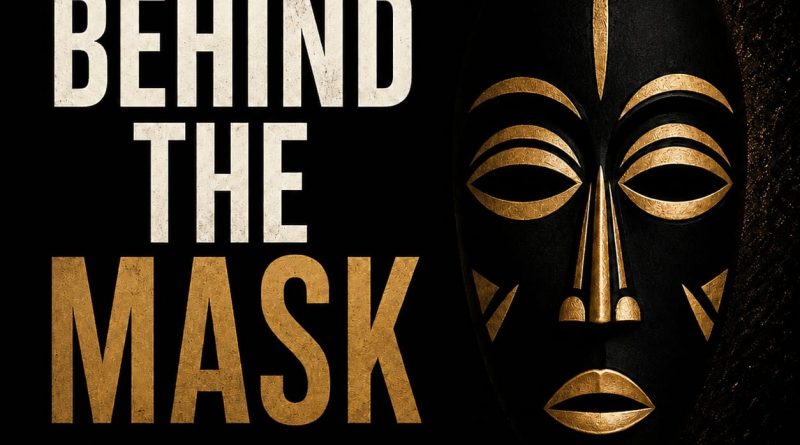
That is the mask we must remove.