NIPSS Memoir Reveals Bullying By Senior Naval Officer, Rear Admiral A. A. Mustapha
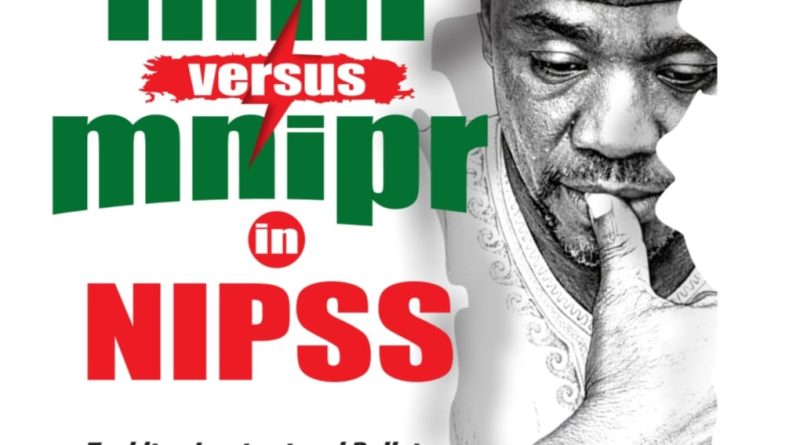
A newly released memoir by PRNigeria Publisher Yushau A. Shuaib has stirred public debate after detailing what he describes as a pattern of institutional bullying during his participation in the Senior Executive Course (SEC) 47 at the National Institute for Policy and Strategic Studies (NIPSS), Kuru, Plateau State. The book, MNI Versus MNIPR in NIPSS: Tackling Institutional Bullying, chronicles his encounters with senior directing staff, disciplinary proceedings, withdrawal from the programme and subsequent legal action against the institute.

In Chapter Six, titled “Queries and the Breaking Point,” Shuaib recounts a series of confrontations with a senior Naval officer Rear Admiral Abubakar A. Mustapha, a Directing Staff member he identifies as the central figure in what became a prolonged disciplinary ordeal. According to him, the conflict began after NIPSS flagged a PRNigeria report on the institute’s transition to a paperless learning platform. Shuaib insists he neither authored nor approved the story, explaining that he had delegated editorial responsibilities before joining the course and that his media organisation, Image Merchants Promotion Limited (IMPR), operates independently of him as publisher.
He writes that he was summoned—alongside his Study Group Chairman, Group Captain Mato Iliya—to meet Rear Admiral Mustapha. Upon arrival, and in the presence of another directing staff member, Professor Elias Wahab, Mustapha ordered both men to remain standing despite empty chairs being available.
During the meeting, he claims Mustapha confronted him aggressively over the publication, repeatedly interrupting his explanations about editorial independence. Although Professor Wahab and the Study Group Chairman attempted to calm the situation, Shuaib says he left feeling humiliated and seriously considering withdrawal from the programme. He describes the encounter as his “first experience of bullying in adulthood.”
Following the encounter, Shuaib received a formal query. He responded by explaining that he had no editorial involvement in the PRNigeria publication, having officially disengaged from his organisation’s operations before commencing the NIPSS programme. He alleges that Mustapha rejected the response for not being “sufficiently apologetic” and directed him to rewrite it in the “NIPSS style.” Shuaib initially declined, but after appeals from Professor Elias Wahab and fellow participant Dr. Samuel Osime, he eventually revised the letter, adding a line expressing “regret for any misunderstanding.”
He writes that the episode exposed what he saw as a culture of institutional conformity. He recounts being shown examples of query responses written by senior public officials and private sector executives, which he describes as “unnecessarily self deprecating,” reinforcing his belief that “institutionalised bullying” had become normalised within the system.
Shuaib also narrates a conversation with Dr. Osime, who had earlier been queried for commending Plateau State Governor Caleb Mutfwang during a courtesy visit. Osime advised him to comply with institutional expectations if he hoped to complete the course and earn the prestigious mni designation. According to Shuaib, the exchange made him question whether the mni badge had become “akin to joining a cult,” crystallising what he calls a difficult choice between personal conviction and institutional conformity.
Despite rewriting his initial response, Shuaib says he was later summoned before a disciplinary panel alongside six other participants over what he describes as minor infractions. He claims he was not allowed to speak before the panel but was issued a “Final Warning”—even though he had never received a prior warning.
Tensions escalated after Shuaib authored an opinion article on Nigeria’s Blue Economy. Although the piece made no reference to NIPSS, he says he received a second query signed by Mustapha and Professor Wahab. He further alleges that an internal PRNigeria editorial email was cited during the disciplinary process, raising concerns about unauthorised access to confidential communications.
Rather than soften his stance, Shuaib says he submitted a strongly worded response defending his professional independence and rejecting what he described as continued “witch hunting,” refusing repeated requests to withdraw or amend the letter.
The memoir also recounts incidents during an official Abuja tour, where Shuaib alleges participants were subjected to excessive control by some directing staff. He describes an episode at the Federal Ministry of Trade and Investment where a directing staff member allegedly stopped a Permanent Secretary from engaging participants informally, insisting hosts were not permitted to “fraternise” with them. In another instance, he claims a directing staff member publicly insulted a participant who raised concerns about staff behaviour outside the Kuru campus.
In a separate chapter, Shuaib reveals that after withdrawing from the programme, he petitioned both the Nigeria Police Force and the National Data Protection Commission (NDPC) over what he describes as unauthorised access to his private email by NIPSS officials—an act he likens to cybercrime and a violation of data protection laws. Despite submitting detailed complaints and evidence, he says no action has been taken more than a year later, raising questions about institutional accountability and enforcement of digital privacy regulations.
Shuaib concludes that while NIPSS promotes strategic leadership, ethical conduct and intellectual excellence, aspects of his experience reflected a culture in which authority was sometimes exercised without empathy or proportionality. He says the events fundamentally altered his perception of the institute and contributed to his decision to challenge subsequent actions through legal channels.
By PRNigeria