
Lagos–Calabar Highway: Ilaje Group Accuses Works Minister Of Route Diversion, Demands Transparency
LAGOS, NIGERIA — A prominent community-based organisation, the Ilaje Omuro Community Connect (IOCC), has raised an alarm over the alleged diversion of the Lagos–Calabar Coastal Highway from its original route along the Ilaje coastline in Ondo State.
The group is demanding full transparency and an independent review of the engineering claims used to justify the realignment.
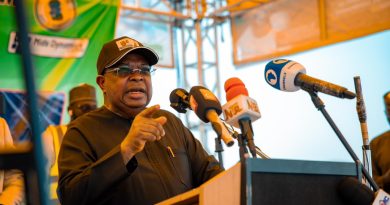
In a strongly worded public petition, the IOCC—which represents more than 1,000 members of Ilaje extraction—challenged the statements emanating from the office of the Honourable Minister of Works, Senator David Umahi.
The group claims that altering the course of the critical infrastructure project threatens fairness, economic inclusion, and the foundational right of the Ilaje people to benefit from national developments.
The Terrain Argument Contradicted
The Minister of Works recently defended the route modification, citing Ondo’s difficult, marshy terrain and deep subsoil challenges as reasons making the original coastal route highly impractical and economically unfeasible.
However, the IOCC has rejected this justification, pointing out that local and regional agencies have successfully executed complex civil engineering projects in the exact same environment.
“How was the Ondo State Oil Producing Areas Development Commission (OSOPADEC) able to undertake road construction from Igbokoda to Ugbonla within the same general terrain?” the group questioned.
The IOCC also cited a 2010 road construction contract awarded by the Niger Delta Development Commission (NDDC) for the Ugbonla–Awoye axis as concrete proof that the terrain is accessible to modern engineering solutions. They are demanding that the Ministry of Works publicly release all technical data relied upon for the detour—including geotechnical assessments, feasibility studies, and environmental impact assessments (EIAs).
A Call to Protect the Presidential Vision
The group expressed deep concern that shifting the multi-billion naira project away from Nigeria’s longest coastline risks “bastardising” the original economic goals of the infrastructure corridor. The IOCC has appealed directly to President Bola Ahmed Tinubu, urging him to intervene to ensure that individual administrative choices do not unfairly disadvantage marginalized coastal populations.
“The Lagos–Calabar Coastal Highway belongs to the people, and no decision concerning public expenditure should be shielded from public scrutiny,” the IOCC statement concluded.
The community maintains that the federal government must provide a comprehensive, evidence-based breakdown if it intends to permanently bypass the historic fishing and oil-producing hubs of the Ilaje coastline.