Kyari Dismisses ₦5 Trillion Agric Loss Claim As Political Propaganda, Cites Output Growth
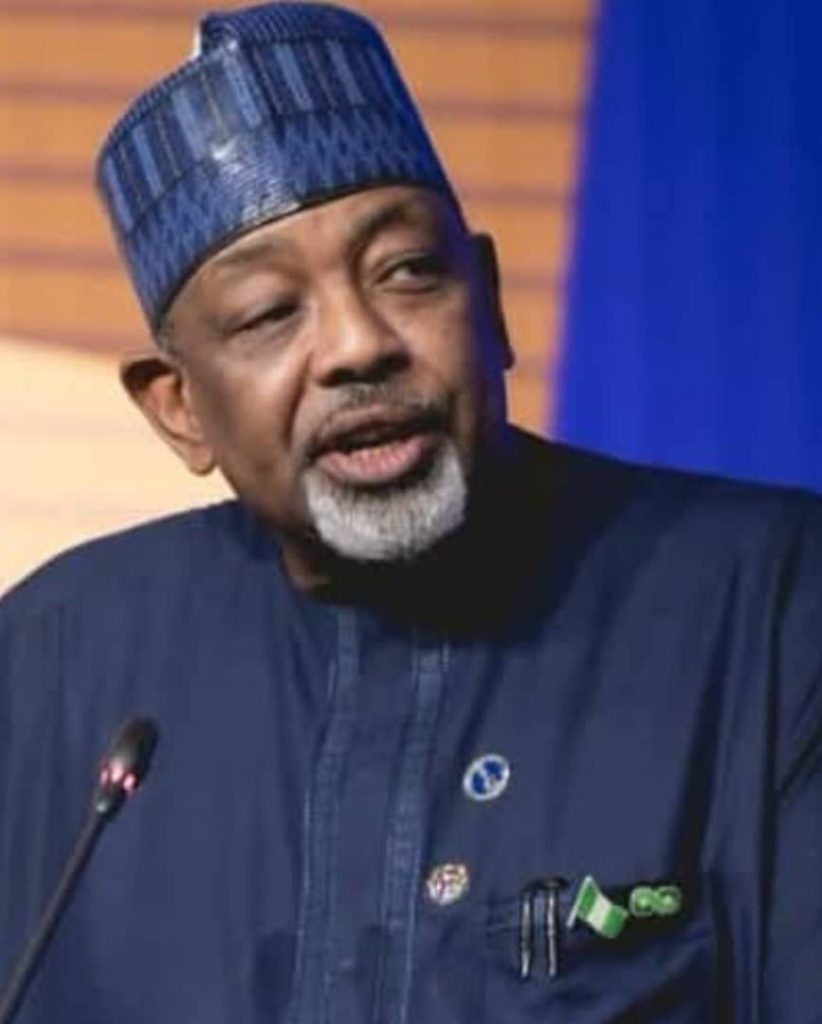
ABUJA — The Minister of Agriculture and Food Security, Senator Abubakar Kyari, has rejected online reports alleging multi-trillion-naira losses in Nigeria’s agricultural sector, describing the claims as false, unsubstantiated, and politically motivated.
In a press statement issued on Thursday, November 19, 2026, Kyari dismissed a circulating write-up that claimed the sector suffered an annual loss of ₦2.5 trillion alongside a projected ₦10 trillion deficit.
He maintained that no credible evidence was provided to back the figures, attributing them to opposition efforts aimed at discrediting President Bola Tinubu’s administration.
Citing data from the 2026 Wet Season Agricultural Performance Survey conducted by the National Agricultural Extension and Research Liaison Services (NAERLS) at Ahmadu Bello University, Zaria, the minister stated that national cereal production reached 29.393 million metric tonnes—a 1.84 per cent increase over 2025 levels—with rice output alone hitting 9.626 million metric tonnes.
Kyari also refuted claims that over 50 per cent of Nigeria’s rice mills have shut down, noting that local processors remain operational with federal support.
Addressing the 150-day duty-free food import window introduced in 2024, he clarified that it was a temporary measure to curb food inflation that expired on December 31, 2024, and has not been renewed.
Highlighting ongoing government interventions, the minister pointed to the free distribution of 2.15 million bags of fertiliser, newly approved funding for over three million bags of NPK fertiliser ahead of dry-season farming, and infrastructure upgrades under the National Postharvest Systems Transformation Programme (NiPHaST).
He also cited financing and partnerships through the Bank of Agriculture, the National Agricultural Development Fund, and Special Agro-Industrial Processing Zones.
Turning to political proposals on trade, Kyari criticised former Vice President Atiku Abubakar’s pledge to reopen Nigeria’s land borders, warning that such a policy would expose domestic farmers to unfair competition from indiscriminate food imports.
The minister reaffirmed the ministry’s commitment to boosting domestic production, reducing post-harvest losses, and lowering food prices, urging stakeholders to measure agricultural progress by empirical evidence rather than political propaganda.