Guerrilla Journalism: We Were Not Accused Or Found Guilty Of Plagiarism, Ojudu Throws Jibes At Ray Ekpu
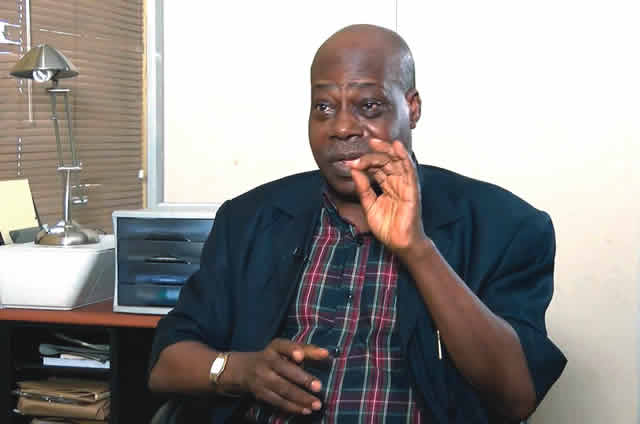
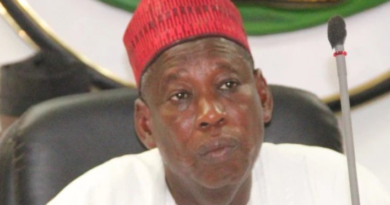
Former Political Adviser to late President Muhammadu Buhari, Senator Babafemi Ojudu has thrown a jibe at one of the founding editors of defunct Newswatch Magazine, Mr Ray Ekpu for attacking those involved in Guerrilla Journalism.
Ojudu in a post titled ” On Ray Ekpu’s Tribute to Dan Agbese–and a Word on Guerrilla Journalism” reminded Ekpu, how he was accused and found guilty of plagiarism, copying and publishing Thomas Paine’s ‘The Age of Reason’, without attribution.
According to the story, Ekpu falsely accused Aare Dele Momodu who was pursuing his Masters degree then now publisher of Ovation International of copyright of his piece and the former opened the Pandora Box that it was from Thomas Paine’s 1794 classics.
This led to a serious allegation, and a panel was set up by the NUJ to unravel the mystery, but Mr Ekpu denied that he hadn’t seen the book in his life.
According to Mr Ojudu, he was on the panel that tried and found Mr Ekpu guilty as charged.
What, however, remained a mystery till today is that Mr Ekpu was coming up with a series, same as Thomas Paine’s ‘The Age of Reason’ word for word.
Below is the full text of Mr Ojudu’s treaties
On Ray Ekpu’s Tribute to Dan Agbese — and a Word on Guerrilla Journalism
By Babafemi Ojudu
I read Ray Ekpu’s moving tribute to our departed brother, Dan Agbese, with a mixture of sadness and admiration. Sadness, because we have lost a fine mind and a gentleman of the craft. Admiration, because even in grief Ray’s pen remains as evocative and commanding as ever.
Ray has endured three personal losses within a short time, and anyone who has walked through such a valley understands that sorrow inevitably seeps into one’s writing. I respect that, and I extend my condolences once again.
Yet, in paying homage to Dan, my brother Ray found space to dismiss what he described as “guerrilla journalism” as “vile propaganda… not fit to be touched by any self-respecting journalist.” It is this portion of his tribute that compels a gentle clarification—not for my sake, but for the sake of younger Nigerians who did not witness those dangerous years when journalism and dictatorship collided head-on.
What Guerrilla Journalism Was — and Was Not
Guerrilla journalism was not a philosophy of propaganda.
It was a press survival strategy in an era when conventional journalism had been criminalised.
Those of us who practised it did so because:
• newsrooms were being sealed, bombed, or proscribed;
• editors and reporters were disappearing into detention;
• publications were banned;
• truth had become an endangered species;
• and the military government had arrogated to itself the sole right to define reality.
What we refused to do, as young men of conscience, was to put on savile-row suits, dash into expensive cars, smell of Arabian perfumes, and dine with men in government and business. Instead, in our jeans and canvas shoes, we jumped from one danfo bus to another, moving discreetly from hideout to hideout, determined to keep the nation informed and military dictators sleepless.
IBB’s Admission — and Why It Matters
I recall a conversation with General Ibrahim Babangida shortly after his exit from power. He said two things gave him the most trouble during his regime:the Orkar coup, and the phenomenon of our publication—the same guerrilla journalism my brother Ray now derides.
He told us he was often astonished to read, in our magazines, details of high-level meetings held just the previous day with his fellow generals. How did these secrets escape? It was simple:we cultivated sources at every level of society.We were trusted by the people because we never traded truth for access, and never supped at the table of power.
How We Worked Under Repression
When a dictatorship deploys fear and violence to silence the press, journalism must either die or adapt.
We chose adaptation.
We reported from hiding, printed in safe houses, wrote under pseudonyms, smuggled stories across borders, and published in the dead of night. We continued to inform Nigerians when darkness threatened to swallow the public sphere.
That—no more, no less—is what guerrilla journalism was:a refusal to let tyranny win by default.
Accuracy, Integrity, and Professionalism.
Was the method perfect? Of course not. No form of resistance under violent repression is.
But to equate it with propaganda is to overlook the dangers faced, the truths uncovered, and the democratic space preserved.
It is worth noting that many of those who felt wronged by our reports went to court. Out of all the cases filed against TheNEWS and TEMPO, we lost only one—the lawsuit by Chief Olu Onagoruwa. And we lost not because our facts were weak, but because we were not represented in court.Mr. Femi Falana, SAN, whose chambers defended us throughout that turbulent period, can attest to this.
Let me also refresh my brother Ray’s memory:
A young man once claimed to have witnessed the preparation of the parcel bomb that killed Dele Giwa. He came to us, and we interviewed him—just as he went to Newswatch, then edited by Ray. We combed through his account, cross-checked details, and found his story hollow. We dismissed it.
Newswatch unfortunately published it, to its later regret.
And, with utmost respect, let me add: at no point in our practice was any of us accused or found guilty of plagiarism. I was a young man when that grave infraction was committed by our senior colleague. I sat on the Committee of Ethics set up by Lagos Chapter of Nigerian Union of Journalists that investigated and found him culpable. If brother Ray has forgotten, this is as good a moment as any to remind him.
Different Traditions, Same Republic
Dan Agbese practised journalism with grace and decency.
Some of us practised journalism with urgency and defiance.
Both traditions served the same republic—just under different conditions.
History has room for all of us.
May Dan’s soul rest in peace, and may our disagreements as survivors never obscure the sacrifices made to keep journalism alive in Nigeria’s darkest hours.