Okanlomo, Thrones, And The Misuse Of History: Why Yorùbáland Must Return to Elder-Led Wisdom
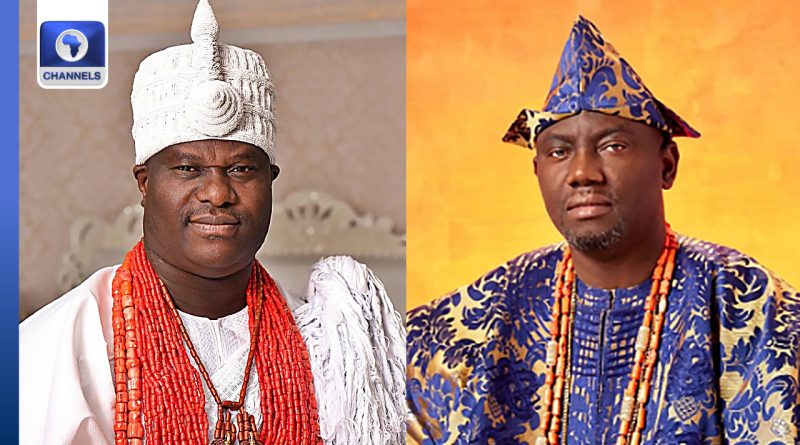
Yorùbáland stands at a delicate civilizational moment. What should have remained a quiet matter of culture and protocol has been dragged into the public arena as spectacle: the recent conferral and counter-conferral of Okanlomo titles, accompanied by palace statements, ultimatums, media amplification, and political overtones. This is not merely a disagreement between thrones; it is a test of whether Yorùbá civilization still understands itself.
History, when properly read, offers clarity. When abused, it becomes a weapon.
A Civilization Built on Separation, Not Supremacy
Yorùbá civilization did not evolve around a single, all-powerful throne. It evolved around a division of authority—carefully balanced, deeply understood, and widely respected. Ilé-Ifẹ̀ was never a military capital; it was something far more enduring: the spiritual and cosmological source of Yorùbá existence. From Ifẹ̀ flowed origin myths, ritual legitimacy, sacred crowns, and the metaphysical grammar of kingship itself.
Ọ̀yọ́, on the other hand, represented a different genius. It built institutions of governance, military organisation, diplomacy, and imperial reach. The Alaafin did not preside over creation; he presided over power. And for centuries, both realities co-existed without confusion.
The fatal modern mistake is the insistence on collapsing these two distinct forms of authority into a single ladder of “supremacy.” That ladder never existed in classical Yorùbá thought.
The Okanlomo Dispute: What Has Gone Wrong
The recent Okanlomo controversy is troubling not because titles were conferred—titles have always been conferred—but because the manner and messaging have violated historical restraint.
Public ultimatums between sacred stools are alien to Yorùbá custom. Palace authority was traditionally exercised through consultation, mediation, and elder consensus, not press statements and countdowns. When thrones speak like political parties, they invite political interpretation—and once that happens, dignity is the first casualty.
Worse still, the use of pan-Yorùbá language (“of Yorubaland,” “of Odùduwà”) without prior collective consultation invites legitimate questions: Who speaks for all? In pre-colonial times, the answer was clear—no single ruler spoke alone on matters that touched the whole civilizational body.
Colonial Amnesia and the Paramountcy Trap
Much of today’s confusion is colonial inheritance. British indirect rule searched for “paramount rulers” because empire administration could not accommodate layered authority. Sacred seniority was dismissed as ceremonial; political visibility was mistaken for civilizational primacy. What emerged was a flattened hierarchy that Yorùbá people themselves never designed.
Post-colonial Nigeria inherited this distortion, and many now argue history from within that colonial frame—unaware that the frame itself is false. The question “Who is supreme?” is not a Yorùbá question. It is a bureaucratic one.
Why This Path Is Dangerous
This Public contestation is harmful in four critical ways.
First, it erodes the moral authority of traditional institutions. Kings are meant to be arbiters above dispute, not parties within it.
Second, it invites partisan capture. Once titles begin to look like political endorsements, thrones lose their insulation from transient power.
Third, it fractures Yorùbá unity, feeding regional suspicion where cooperation is needed in a difficult national moment.
Fourth, it opens the door to endless litigation and state interference, dragging culture into courtrooms ill-suited to resolve it.
No civilization survives long by desacralising its own pillars.
The Elders’ Path: Why It Is the Only Credible Solution
Yorùbá history provides a solution, and it is neither dramatic nor novel: elders must intervene.
The recent gathering during the 90th birthday celebration of Chief Kessington Adebutu—popularly known as Baba Ijebu—demonstrated something profound. In one place sat royalty, statesmen, captains of industry, and respected elders, not to posture but to honour age, continuity, and restraint. No ultimatums. No rival declarations. Only presence and mutual recognition.
That gathering unintentionally set the template Yorùbáland now needs.
What an Elder-Led Intervention Should Look Like
First, a neutral summit should be convened by respected non-palace elders—figures whose stature comes from age, service, and pan-Yorùbá respect, not from a throne. Baba Ijebu has shown he can host such a moment; others of similar standing may join.
Second, the summit should lead to a short, binding protocol on pan-Yorùbá titles, founded on historical sense:
Titles invoking Odùduwà and origin should be recognised as cultural-spiritual, requiring consultation with Ilé-Ifẹ̀.
Titles invoking “Yorubaland” or collective civic identity should require prior consultation among major crowns and elders before conferment.
Public ultimatums between thrones should be formally renounced as unacceptable.
Third, a joint public communiqué should educate the people—especially the younger generation—on the layered nature of Yorùbá authority, correcting decades of colonial miseducation.
Fourth, disputes should return to mediation first, silence second, litigation last.
This Is Bigger Than Titles
At stake is not Okanlomo alone. At stake is whether Yorùbáland will continue to manage its internal affairs with wisdom, or surrender them to spectacle and external interpretation.
A civilization that forgets how it governed itself will soon be governed by others.
Final Word
Ilé-Ifẹ̀ does not need to prove its antiquity.
Ọ̀yọ́ does not need to reenact its empire. Both need restraint. Both need elders. Both need to remember that the authority they inherited was never personal—it was civilizational.
If the current moment produces an elder-led settlement, it will be remembered as a correction. If it does not, it will be remembered as a warning.
Yorùbáland has always known the difference between power and wisdom. Now is the time to choose the latter.
Lanre Ogundipe
President
IBILE CLUB
Former President Nigeria and Africa Union of Journalists
December 22, 2025