
When Farms Grow Fences: On Power, Land And The Executive grabbing Appetite
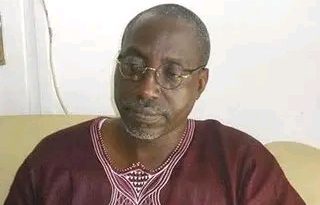
By Lanre Ogundipe
“When leaders begin to harvest land instead of crops, the nation must ask who is feeding whom.”
In the early days of every administration, agriculture is always fashionable.
Leaders gather beneath banners of hope, sleeves rolled just enough for the cameras, speaking earnestly about food security, mechanised farming and the promise of a green revolution. Maps are drawn. Hectares are announced. Bulldozers clear the earth as if the nation is preparing to negotiate directly with abundance.
The soil is invoked like a national prayer.
And for a brief moment, the country believes again.
But somewhere between the speech and the harvest, something curious happens.
The farms begin to grow fences.
Not crops.
Fences.
It starts quietly, almost respectfully.
A parcel of land is acquired “in the overriding public interest.” A signature appears. A gazette is issued. The language is reassuring, administrative, benevolent.
Agricultural development.Food security.
Strategic intervention.
The land is cleared.Expectations are planted. Farmers step aside, trusting that what will emerge from the soil will justify their displacement.
Then the seasons pass.
No crops appear.
But the fences do.
Tall, confident, immovable.
Stretching across the land like a declaration that something has changed—something fundamental, something irreversible.
Behind the fences, silence.
Then, as if the soil has undergone a sudden ideological conversion, signboards emerge.
“Royal Gardens Estate.”
“Green Valley Residences.”
“Executive City Phase One.”
The transformation is complete.
The farm has discovered its true destiny.
Not agriculture.
Real estate.
But the story does not end with farms alone.
In the Republic of Expanding Estates, even roads have learned new tricks.
For here, roads are not always built to connect people.
Sometimes, they are drawn to collect land.
A new “strategic road corridor” is announced. Survey lines cut across villages and farmlands with impressive authority. The language is familiar—development, access, infrastructure, economic growth.
Communities nod.
After all, roads are symbols of progress.
But in time, the road behaves strangely.
It stretches wider than necessary.
It bends curiously.
It expands ambitiously.
Soon, it is no longer clear whether the road is serving the land or the land is serving the road.
What begins as a public infrastructure project quietly becomes a cartographic harvest. Land along the corridor is acquired, extended, redefined—sometimes far beyond the immediate needs of transportation.
And before long, the familiar signs appear again.
Fences.
Gatehouses.
Estate billboards.
The road, it seems, has delivered more than connectivity.
It has delivered opportunity.
Thus emerges a new craft in the architecture of governance: the geography of convenience—where roads are not merely pathways but instruments, drawing invisible boundaries that later become visible assets.
Meanwhile, at the centre of this quiet transformation stands the State Chief Executive, custodian of land under the authority of law, trustee of public interest, interpreter of development.
But in this evolving theatre, the role expands.
The executive does not merely govern land.
He curates it.
Redirects it.
Sometimes, he redefines the very meaning of ownership.
Through the elegant instrument of executive authority, land moves with remarkable obedience. What was yesterday a communal heritage becomes today a development zone. What was once sacred ground becomes tomorrow’s investment opportunity.
And when the law alone is not sufficient to quiet the ground, tradition is invited to assist.
Here, the story takes a deeper turn.
For land, in many Nigerian communities, is not merely property.
It is ancestry.
It is memory.
It is identity.
And so, to smooth the path of transformation, the corridors of power occasionally extend into the delicate terrain of traditional institutions.
Titles are recognised.
Disputes are interpreted.
Authorities are endorsed.
Sometimes, history itself is rearranged with administrative confidence.
In this subtle interplay, governance begins to wear a second robe—not only as political authority, but as arbiter of tradition.
It is here that power becomes most imaginative.
For when executive authority begins to interpret tradition, to recognise one voice over another, to elevate one claim above competing histories, it steps beyond administration into something far more delicate.
It begins to play custodian of heritage.
Or, as some might say more quietly, it begins to play god over matters older than the state itself.
The consequences rarely appear immediately.
They settle slowly.In murmurs.
In grievances.
In communities that feel unheard but not entirely silent.
Meanwhile, the estates continue to rise.
The fences multiply.
The roads extend.
The maps evolve.
And the original purpose—agriculture, community, heritage—fades gently into administrative memory.
The farmers, displaced from their soil, become spectators to a new economy they cannot afford to enter.
Their land, once measured in seasons, is now measured in square metres.
Their harvest, once predictable, is now theoretical.
And the nation, which once spoke passionately about food security, finds itself importing what it once grew.
This is the quiet arithmetic of the Estate Republic.
Land increases.
Food decreases.
Fences expand.
Farms disappear.
Yet the language of governance remains confident.
Development.
Modernisation.
Urban expansion.
Progress.
But beneath the vocabulary lies a simpler truth.
A nation cannot eat fences.
It cannot harvest estates.
It cannot irrigate speculation.
And it cannot sustain itself on the conversion of its own foundation.
History, as always, is patient.
It watches the transformation of land into luxury, of policy into profit, of authority into appetite.
And one day, it asks a question that no fence can answer:
When the farms were taken, who was feeding the nation?
The answer, like the land itself, will not be hidden.
It will be found in signatures.
In approvals.
In corridors where decisions were made quietly.
Because in the Republic of Expanding Estates, nothing is accidental.
Farms do not simply become fences.
Roads do not simply expand.
Traditions do not simply shift.
They are all, in their own quiet way,
directed.
Ogundipe, Public Affairs Analyst, former President Nigeria and Africa Union of Journalists writes from Abuja.