Journalism Has Changed; Don’t You Think?
“Comment is free, but facts are sacred”– Charles Prestwich Scott.
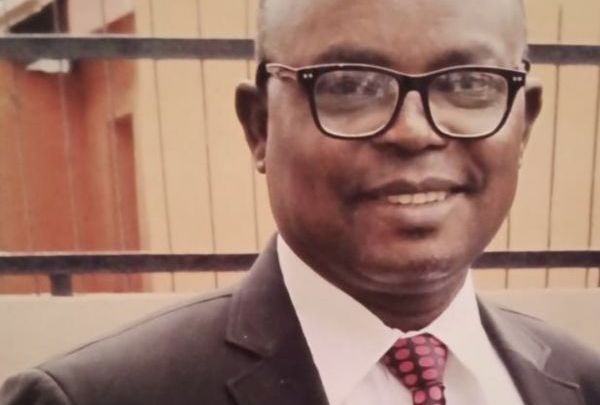
By Bolanle BOLAWOLE
turnpot@gmail.com 0705 263 1058
Let me state from this starting point that I am an accidental journalist, sort of; just like Nasir el-Rufai, ex-governor of Kaduna state, described himself as an accidental civil servant. But let no one mistake the reference to el-Rufai here to mean anything! He is neither friend nor foe!
I set out to be an academician. As a secondary school leaver, my heroes were Marxist scholars Dr. Segun Osoba and Dr. Bala Usman of the then University of Ife (now Obafemi Awolowo University), Ile-Ife and Ahmadu Bello University, Zaria respectively. Hence my choice of History as a course of study at UNIFE – and what a pleasure to have studied at the feet of our iconic comrade, Dr. Segun Osoba! I passed out at Ife in 1982 with a combined honors degree in History and Political Science.
The two History teachers were the authors of the minority report that emanated from the 1976 Constitution Drafting Committee (CDC) inaugurated on October 18, 1975 at the Nigerian Institute of International Affairs (NIIA), Victoria Island, Lagos by the then military Head of State, Gen. Murtala Muhammed.
Known as the “50 wise men”, the CDC was later reduced to 49 members because Chief Obafemi Awolowo declined to participate in the committee headed by legal luminary, Chief FRA Williams. Murtala Muhammed was later assassinated in an abortive coup on February 13, 1976 by Col. Bukar Sukar Dimka and co.
Immediately after my NYSC at the University of Ibadan, I enrolled for the M.SC. in Political Science course in the same university, but the mistake of someone I never knew ensured I did not graduate with my mates. My long essay was sent to the wrong examiner; when this mistake was discovered late in the day, I was sent to the right examiner, a professor and Head of the Political Science department at the University of Ilorin. He scored me an A and also promised me a Graduate Assistantship job in the department.
So I kept going to Ilorin but he kept posting me for reasons I could not fathom, until, one day, his secretary took pity on me and told me point black that Prof. had decided to reserve the two available vacancies for two of his Ijebu kinsmen who were still studying for their own master’s degree!
Was I devastated? Prof. was from an Ishara royal family in Ogun state while I am from Owo in Ondo state – both of us being Yoruba. I understand he passed on a few years ago. May his soul rest in peace! I told my story to a friend and colleague of his some years back and he could only giggle and wonder what came over him!
Each time I remember my UNILORIN experience, I also remember what my role model, Alhaji Nojeem Jimoh, always says about the Yoruba-nation struggle: that it is our being in Nigeria that solidifies and gives meaning to our Yoruba identity. If and when we achieve our goal of an independent Yoruba nation, we shall retreat to what was and begin to see ourselves as Ijebu, Egba, Ekiti, Owo, Egun, Awori, Oyo, Akoko, Ilaje, etc. O! The ethnic struggles and cut-throat competitions that will ensue! God help us!
I say this not to denigrate or discourage anyone involved in the Yoruba-nation struggle but to sound a note of warning. To be fore-warned, as they say…
I had a flair for writing early. At UNIFE, I took interest in our Marxist groups’ campus newsletters and the first two articles I wrote after my M.SC. graduations were published by the then flagship of the Nigerian media, The Guardian newspapers, when respected Sonala Olumhense was the Editorial Page Editor. I also contributed to the Ibadan-based Sketch newspapers, now defunct. Shortly after, as I was still scurrying everywhere for a lectureship, I got employed as a Senior Reporter by Sketch newspapers in October 1985 and that was how my journalism odyssey began.
I did not study Journalism or Mass Communications within the four walls of any school; I learned on the job. I grew from a reporter who covered the various gamut of reportorial work from the grassroots to the urban centres and cities; from the ‘red light’ districts to the polished exclusive preserves of the elite, traversing virtually every Desk – Politics, Business/Finance, Foreign Affairs, Labor, General Beat, name it.
I moved from the Newsroom to the Features department. I handled the Sunday, Saturday, and Daily publications at various levels, up to the editorship. In the giddy days of military dictatorship and the struggle to revalidate the June 12, 1993 presidential election won by MKO Abiola but annulled by the military dictatorship of Gen. Ibrahim Babangida, I was also in the trenches like many others. Giving vent to the “guerilla press” genre we had encountered in Marxist literature, I led the task of editing a weekly newspaper published underground by the PUNCH. Like many others, I suffered harassment; was haunted, hunted and detained, narrowly escaping getting martyred.
I had been Chairman, Editorial Board; Deputy Editor-in-Chief and, at some points, a newly-created Advertorial Department was under my purview while the Advert Department itself worked closely with me. I poked my nose in Printing as well as the Circulation departments as occasion demanded. Of course, I was also the Managing Director/Editor-in-Chief of a newsmagazine, thereby affording me an opportunity to study as well as oversee the technicalities and nuances of that special branch of newspapering.
For decades now, I have maintained columns in respected national newspapers. I also feature regularly as an analyst on radio and television.
Not one, not two persons have said that in other climes, I will qualify as Professor of Practice in Journalism or Mass Communications! The only aspect of the profession that I have been absent from – and deliberately so – is its unionism. I am not a union person. The only time I had participated in any union activities was when my comrade, Lanre Arogundade, contested for the chairmanship position of the Lagos State chapter of the Nigerian Union of Journalists.
I saw quite early how union activities were employed by some reporters as shields and excuses to shirk their duties and responsibilities. I also saw how union leaders employed blackmail to get by and decided against getting involved in union activities – but this is not to say that I see nothing good in union activities. My choice is personal to me – whether right or wrong.
I squirm when union leaders solicitously go cap-in-hand to the very people, agencies and organizations – public and private – that they are mandated by the Constitution to hold accountable to the people. They arrange and give awards – Best this, and Best that – to the very organizations and personalities they are supposed to exercise watchdog functions over. I may be wrong, but I do not think such a watchdog can escape being compromised. How can they avoid being beholden to those from whom they seek favors? For, as they say, he who pays the piper…
Although I also teach Political Science courses in a private university, I earn my living working mainly as a journalist. So I introduce myself as a “journalist” when I am asked about my profession. But is journalism a profession?
The vice-chancellor of a first-generation Nigerian university stared me in the face sometimes ago and said journalism is a vocation and not a profession. He did not mean to denigrate but to draw attention to the fine line that separates professions from vocations. Journalism can be a profession but I think its fore-fathers deliberately chose to remain a vocation or trade union even when others like public relations and teaching were professionalizing. Is it too late for journalism to quit being a vocation/trade union and become a profession? Is such a move even desirable? I leave that as a topic for another day!
But it would appear as if it is the lack of the rigors of professionalism that has made journalism an all-comers affairs. Before university graduates began to stream into the profession, it used to be looked down upon and derided; most of its practitioners being School Certificate or Diploma holders. This is not to say that those early journalists did not prove their mettle but in a society crazy for degrees and titles, there is no way such a perceived “deficiency” would not rub off negatively on the profession and its practitioners.
The advent of social media has not helped matters. These days, all you need to become a journalist is an android phone! Once you can string sentences together – factual or false, with tenses and grammar that do not align – you are a journalist! Who registers journalists? Who regulates the profession? What standards must be met? And who enforces? Some of the criteria for a profession are that it sets and enforces standards and also self-regulates. Does journalism meet this threshold?
If we excuse social media for what it is, what of the traditional media – print and electronic? If we ignore the pretenders to journalism, what of those with known pedigree who, regrettably, brazenly brutalize journalism ethics and, painfully, to wide and wild acclaim? Supposedly well-trained and well-horned journalists assault with relish every known journalism ethics. At best, they are partisan political activists seizing and desecrating the podium of journalism.
Trust me, I see nothing wrong in anyone being a political activist. It is a noble vocation or calling whose services are sorely needed in any democratic society properly so-called. But let such elements openly announce themselves as such and stop masquerading as journalists.
The ethics of journalism are clear and unambiguous. Detach yourself from the issues. Facts are sacred, opinion is free. Listen to and state all sides to an issue. Be fair to all. When in doubt, leave out. Lay the facts bare and allow your audience or readers the freedom to reach their own conclusions. Don’t goad them in this or that direction. Don’t intimidate them. Interviewers must be civil, courteous and respectful, even when vigorously pursuing leads.
Why abuse or exchange words with your guest? The moment you enter into the ring yourself, any claim to objectivity is lost. And journalism is all about objectivity, fairness, and truth. Even columnists and commentators who are allowed a lot of leg-room are expected to still serve their audience “informed commentaries!”
The basic rules which, for ages, have governed journalism are today thrown under the bus by gallivanting political activists masquerading as journalists. Interviewers speak more than their guests! They hardly allow someone they had invited to throw light on an issue the opportunity or liberty to do so! They already have a preconceived idea and are abrasive the way they railroad their guests towards it! Decline and suffer verbal assault!
Today’s deviation from the journalism I knew is massive and I just felt I should express an opinion, since comment is free. I come in peace!
Former editor of PUNCH newspapers, Chairman of its Editorial Board and Deputy Editor-in-chief, BOLAWOLE was also the Managing Director/Editor-in-chief of The Westerner news magazine. He writes the ON THE LORD’S DAY column in the Sunday Tribune and TREASURES column in New Telegraph newspaper on Wednesdays. He is also a public affairs analyst on radio and television.