
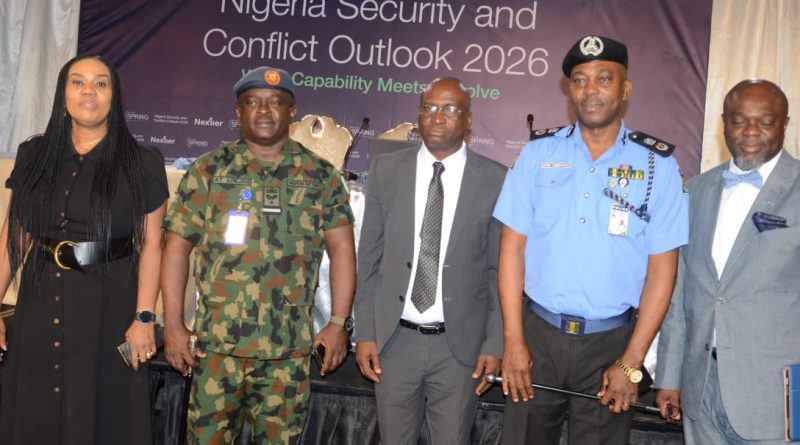
Violence Kills 4,654, Kidnaps 3,141 Across Nigeria In 2025 – Security Report Warns Of Escalating Threats
By Bukar BOLORI
Violent conflicts across Nigeria claimed at least 4,654 lives in 2025, while 3,141 people were kidnapped in 1,274 separate incidents nationwide, according to the Nigeria Violent Conflicts Database 2025 released by Nextier Advisory Ltd. on Wednesday.
The report, a partnership between Nextier, and SPRiNG Programme, titled “Nigeria Security and Conflict Outlook 2026: When Capability Meets Resolve,” highlights a worsening security landscape fueled by banditry, terrorism, communal clashes, and organized crime.
Presenting the findings in Abuja, the Managing Partner of Nextier, Dr. Ndubuisi Nwokolo, said banditry remained the deadliest driver of violence. In 2025, bandit attacks accounted for 599 incidents and 2,724 fatalities, a sharp rise from 256 incidents and 1,585 deaths recorded in 2024.
“The North-West recorded the highest number of attacks, while the North-Central zone experienced more fatalities, showing a disturbing increase in brutality,” Nwokolo said.
The report also noted a dramatic spike in kidnapping, including mass abductions in rural areas, marking one of the highest levels in recent years.
Terrorism and insurgency continued to claim lives, with 43 terror-related incidents reported. Borno State remained the epicentre, accounting for 397 casualties. Farmer-herder conflicts also intensified, rising from 58 incidents and 188 deaths in 2024 to 87 incidents and 322 fatalities in 2025. Climate pressures, ethnic tensions, political factors, and banditry were cited as key contributors.
Nextier highlighted the role of illicit mining as a major funding source for criminal networks, noting that a prominent bandit leader, Kachalla Mati, reportedly earns up to N300 million weekly from illegal gold sales. Porous borders, proliferation of small arms, and instability in the Sahel region were also identified as key enablers of violence.
Looking ahead, the report warned that insecurity could worsen in 2026 due to growing alliances between terrorists and bandits, the expansion of armed groups into new states such as Kwara and Kano, and rising political tensions ahead of the 2027 general elections.
It projected that election-related violence, cult clashes, communal disputes, and gunmen attacks would remain concentrated but increasingly lethal.Economic pressures, youth unemployment, and inflation were also cited as factors aggravating the country’s security challenges.
Nextier identified 14 major threat clusters driving instability, including banditry, terrorism, kidnapping, secessionist unrest, communal violence, and illegal mining activities.
To address these threats, the report called for strengthened intelligence coordination, community policing, and closer collaboration with international partners.
It urged the Nigerian Armed Forces and intelligence agencies to improve operational security, while the Department of State Services and the Economic and Financial Crimes Commission were advised to intensify financial surveillance to dismantle ransom networks.
The report also recommended full implementation of livestock reforms, including the National Livestock Transformation Plan, alongside early warning systems and dialogue to mitigate farmer-herder clashes.
It criticized reactive electoral security measures, advocating for preventive strategies and reconciliation mechanisms post-election.
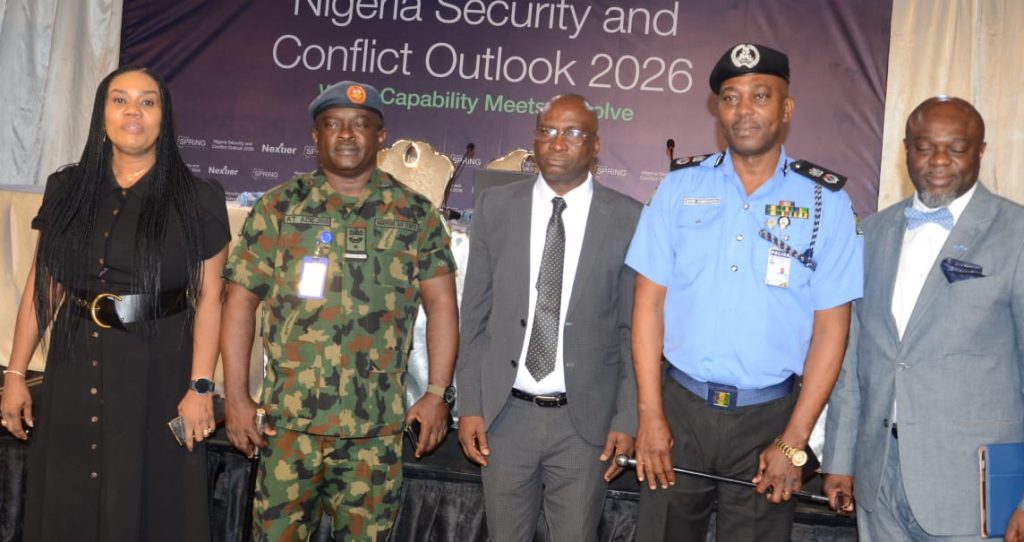
Delivering a keynote address, Deputy Inspector-General of Police, Idegwu Okuoma, represented by Commissioner of Police Edwin Ogbehagha, said the report offers “critical insights into Nigeria’s security realities,” urging agencies to bridge the gap between government capacity and citizens’ experiences.
He added that public safety should not be measured only by arrests or deployments, but by whether citizens feel secure, noting that the Nigeria Police Force is expanding community policing and grassroots intelligence initiatives.
Air Commodore Ademola Adejimi, representing the Chief of Air Staff, reaffirmed the Nigerian Air Force’s commitment to stabilizing the country through sustained aerial operations.
Zissimo Vergos, Deputy Head of Delegation and Head of Political, Press and Information, stressed the need for a whole-of-society approach, calling on communities, traditional and religious leaders, civil society, and the media to collaborate with security agencies in building trust and preventing violence.
“Transparency, accountability, and respect for human rights are essential to achieving lasting security,” Vergos said.
The report paints a sobering picture of Nigeria’s security environment and highlights the urgent need for coordinated action to address the interconnected threats driving violence and instability across the nation.