
Fagbemi Seeks Major Reforms To Strengthen Enforcement Of ECOWAS Court Judgment
By Bukar BOLORI
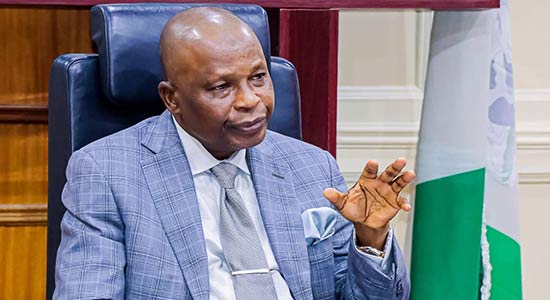
Nigeria’s Attorney-General of the Federation and Minister of Justice, Lateef O. Fagbemi, has called for sweeping reforms to strengthen the enforcement of judgments delivered by the ECOWAS Court of Justice, warning that weak compliance mechanisms risk undermining regional justice and integration.
Speaking at a Special Forum marking the 50th anniversary of the Economic Community of West African States (ECOWAS), Fagbemi said that while the Court has recorded significant milestones since becoming operational in 2001, its authority is being weakened by persistent enforcement challenges and structural gaps.
The Attorney-General acknowledged that the Court has delivered landmark judgments on human rights, governance and media freedom, earning credibility as a regional judicial body.
However, he noted that the real test of any court lies not only in its pronouncements but in the willingness and capacity of member states to comply.
Fagbemi identified what he described as an “enforcement deficit” as one of the Court’s most pressing challenges, stressing that the Court lacks direct enforcement powers and depends largely on the goodwill of member states.
He also pointed to sovereignty concerns and political resistance, particularly in cases touching on sensitive constitutional or governance matters.
According to him, some rulings have been criticised as stretching jurisdiction beyond the Court’s mandate or imposing obligations that are difficult to enforce domestically.
“These criticisms, whether justified or not, highlight the urgent need for clarity in the Court’s role and stronger institutional support,” he said.
The Attorney-General further observed that the absence of an appellate mechanism has contributed to perceptions of rigidity.
Because judgments of the ECOWAS Court are final, he argued, states sometimes feel constrained by decisions they cannot challenge through a second-tier review process.
Drawing comparisons with other international judicial bodies, Fagbemi noted that courts such as the European Court of Human Rights and the Court of Justice of the European Union operate structured supervisory and review mechanisms that enhance acceptance of their rulings.
He said the ECOWAS Court’s lack of layered oversight and follow-up procedures makes its decisions more vulnerable to resistance, especially in politically sensitive cases or where substantial financial awards are involved.
Beyond judicial design, Fagbemi linked the Court’s challenges to what he described as broader institutional weaknesses within ECOWAS itself.
Limited political authority, dependence on voluntary compliance by member states, and inconsistent enforcement across sectors such as trade and security, he said, have created a culture where non-compliance often carries minimal consequences.
“The weakness of ECOWAS as an institution directly translates into weakness of its judicial arm,” he stated, warning that if regional decisions are treated as advisory rather than binding, the rule of law at the supranational level will erode.
Despite the concerns, the Attorney-General said the bloc’s golden jubilee presents an opportunity to recalibrate and strengthen the regional justice architecture.
He proposed a series of reforms, including: Establishing a regional supervisory mechanism to monitor compliance with judgments and apply political pressure where necessary; Introducing an appellate or review process to enhance confidence in the Court’s decisions; Creating structured compliance hearings and mandatory follow-up reporting; Adopting clearer enforcement protocols; Exploring cooperation agreements similar to those used by other international courts.
Fagbemi emphasised that integration without justice is fragile, adding that the ECOWAS Court remains central to the region’s aspiration for accountability, cross-border justice and respect for human dignity.
“As we celebrate fifty years of ECOWAS, we must commit to a future where the rule of law is not merely an aspiration but a lived reality across West Africa,” he said.
On his part, the President of the ECOWAS Court of Justice, Hon. Justice Ricardo Gonçalves delivered a direct but diplomatically worded message to Nigeria: compliance with the Court’s judgments is not optional, but a binding legal obligation under Community law.
The President said judicial decisions lies “at the very heart of the credibility of our Community project.”
The address, delivered before Nigeria’s Attorney General, judges of the Court, representatives of the Nigerian Bar and senior government officials, underscored that the Court’s judgments are final, binding and immediately enforceable under the Revised ECOWAS Treaty and related protocols.
“Compliance with the Court’s decisions is not a political option — it is a legal obligation,” the President declared, stressing that the Court is not merely a judicial body but “a pillar of the regional rule of law.”
He noted that since the Court’s establishment, 128 cases have been instituted against the Federal Republic of Nigeria. Of that number, 66 cases have been closed; 10 have been executed; while 52 remain pending execution.
The figures, the President said, were not presented as censure but as an “objective basis for joint and profound reflection.”
He noted that: “If the Federal Republic of Nigeria leads by example, it will strengthen the authority of the Court and send a clear message of commitment to the regional rule of law.”
He acknowledged that non-compliance often stems not from outright refusal but from structural and institutional weaknesses.
Among the factors identified were: Absence of national coordination mechanisms to follow up on Court decisions; Budgetary and administrative constraints, particularly in cases involving financial compensation or structural reforms; Weak integration of Community decisions into domestic legal systems; Coordination gaps between executive, legislative and judicial branches; Political sensitivity of certain human rights and governance cases; Limited use of ECOWAS’ sanctions regime; Lack of a formal enforcement mandate for the Court itself; Delays in providing updates on implementation; Differences in legal systems across Member States.
He said: “These causes should not be viewed as accusations, but as institutional realities requiring structured responses and strengthened cooperation.”
He, however, warned that failure to enforce judgments, risks eroding the Court’s authority, weakening the Community legal system, diminishing citizens’ confidence in regional justice and harming West Africa’s international image at a time when the region seeks to project stability and institutional predictability.
He said: “Without enforcement, the decisions of the ECOWAS Court become merely declaratory,” the President said.
“Declaratory justice without practical effect does not fulfil its transformative function.”
The warning comes amid renewed efforts by ECOWAS institutions to consolidate regional integration at a time of political transitions and governance challenges across parts of West Africa.
The Court also outlined steps already taken to improve compliance, including: Creation of a dedicated Enforcement Division within its Registry; Regular dialogue with designated national authorities; Setting deadlines for compliance within judgments; Follow-up requests to Member States on implementation status; Presentation of enforcement updates to the ECOWAS Council of Ministers and Conference of Heads of State and Government; Advocacy for ratification of all legal instruments relating to the Court.
The President however conceded that these measures “may not be sufficient” and called for deeper cooperation with Nigeria to identify additional solutions.