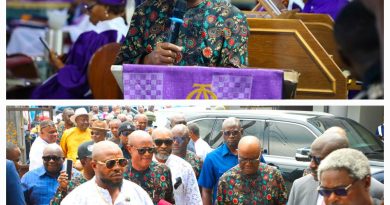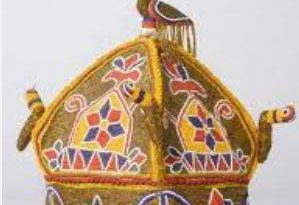

Don’t Let Founding Fathers Regret Our Independence, Jonathan Urges Nigerians At Macaulay Colloquium …Release His Land For A Memorial Hall, Bode George Urges Tinubu
LAGOS, Nigeria — Former President Goodluck Ebele Jonathan has warned that Nigeria’s current generation of leaders and citizens must not allow the country’s founding nationalists to regret their struggle for independence, calling for urgent democratic, educational, and institutional reforms ahead of the nation’s 2060 centenary.
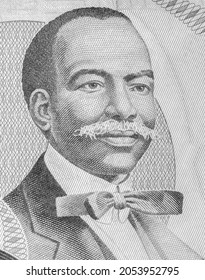
Speaking on Saturday, November 14, 2026, at a colloquium held at the Nigerian Institute of International Affairs (NIIA) in Lagos to mark the 162nd posthumous birthday of nationalist pioneer Herbert Macaulay, Dr. Jonathan challenged Nigerians to confront the stark gap between the vision of independence and the country’s present reality.

Addressing an audience of dignitaries, scholars, and youths under the theme “Nationalism and Nation Building,” the former president noted that sixty-six years after independence, Nigeria has fallen behind global peers that gained freedom around the same era, such as South Korea, India, and Singapore.
“The question we must confront today is whether, sixty-six years after independence, we can authoritatively say that these expectations have been substantially met,” Jonathan stated.
“In Nigeria, and as in many other African countries, challenges of leadership, institutional weaknesses, corruption, policy inconsistency, inadequate infrastructure, insecurity, and our overdependence on the export of raw materials have all contributed to our difficulties.”
Highlighting that winning independence and building a nation are two distinct undertakings, Jonathan urged policymakers to look toward Nigeria’s 100th independence anniversary in 2060—just 34 years away—and set measurable targets for human development, life expectancy, and industrialisation.
“We must not make Herbert Macaulay, Nnamdi Azikiwe, Obafemi Awolowo, Ahmadu Bello, and the other founding nationalists regret, even in their graves, the struggle they waged for our independence,” he warned.
“The greatest tribute to our national heroes is not merely to celebrate their birthdays or preserve their monuments, but to build a nation that reflects the ideals for which they struggled.”
To put the country on a path of sustainable growth before 2060, the former president outlined a four-point reform agenda:
• Reforming Democracy: Reviewing Nigeria’s current system to uphold the rule of law, judicial independence, separation of powers, and accountability.
• Merit-Based Political Recruitment: Abandoning flawed recruitment processes that prioritise regional, ethnic, and religious sentiments over competence and capacity.
• Functional Education: Overhauling the education sector to drive technological innovation. Citing the 2026 Times Higher Education rankings—where Nigeria’s top universities sit in the 801–1000 global band—Jonathan warned that Nigerian institutions risk remaining mere “centres of knowledge consumption” unless they break into the global top 200.
• Strengthening Institutions: Building credible, independent public institutions rather than relying on “strong individuals” to sustain national stability and progress.
Dr. Jonathan also emphasised the role of young Nigerians, urging them to view the nationalist struggle as an ongoing responsibility requiring innovation, civic participation, and a firm demand for accountability from those in power.
Speaking earlier in his welcome address, Chief Olabode George urged President Bola Tinubu to return the land where Herbert Macaulay’s house was built on Lagos Island but was demolished shortly after his death for a post office building to the family to build a memorial hall in his honour.