
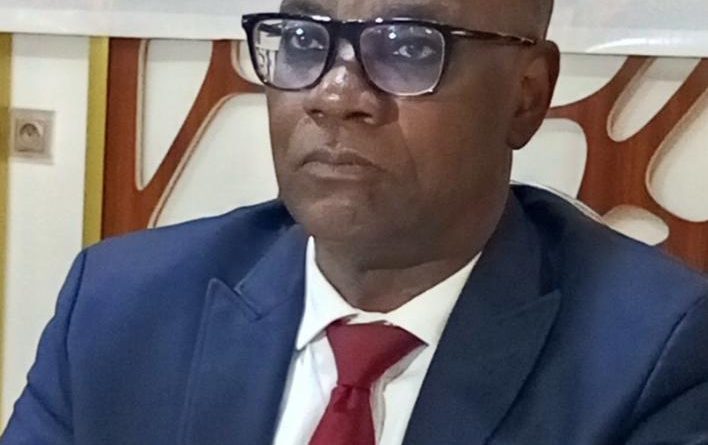
WAHO Chief: “Until I Get There, I Won’t Give Up” — Pitche Vows To Transform Region’s Health System
By Bukar BOLORI
Incoming Director-General of the West African Health Organisation (WAHO), Prof. Vincent Palokinam Pitche, has declared that he is determined to bring his experience, energy and reform agenda to bear on the region’s health sector, insisting that he would not relent until he delivers on the mandate entrusted to him.
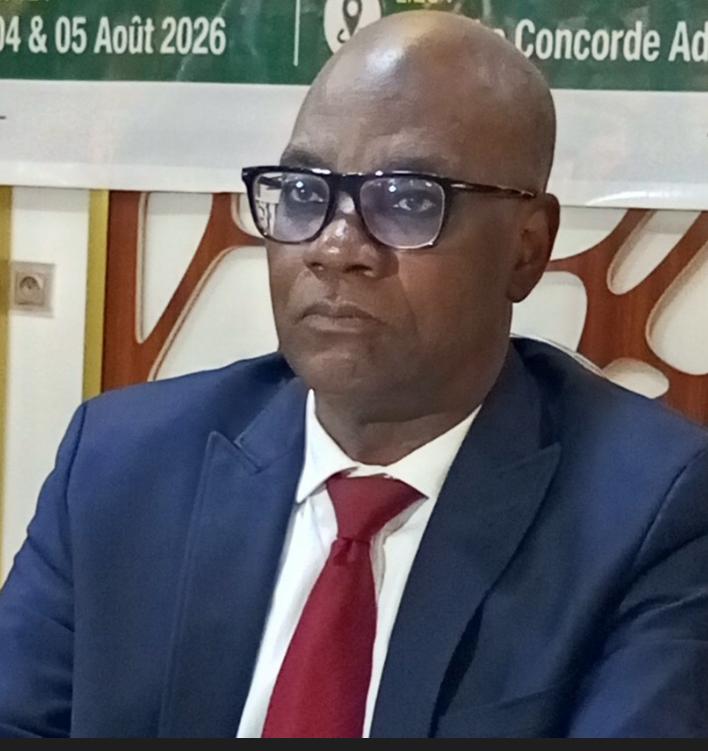
Pitche, who is expected to assume office as head of the regional health institution, gave the assurance in an interaction ahead of his formal assumption of duty, outlining a vision anchored on stronger health systems, sustainable financing, regional solidarity and improved access to quality healthcare across West Africa.
His message — “Tant que je ne suis pas arrivé, je ne lâche rien”, loosely translated as “Until I get there, I won’t give up” — captures what he described as his determination to confront the complex health challenges facing the Economic Community of West African States (ECOWAS) region.
The incoming WAHO chief brings extensive experience in public health and disease-control programmes, particularly from Togo, where he played a prominent role in the country’s response to HIV/AIDS for nearly two decades.
That experience, according to observers, could prove crucial as West Africa confronts a health landscape increasingly defined by interconnected challenges — infectious diseases, emerging epidemics, maternal and child mortality, weak health infrastructure, shortages of health workers, inadequate domestic financing and growing pressure on already stretched public-health systems.
For Pitche, however, the region’s challenges cannot be addressed through isolated national interventions.He believes West African countries must strengthen collective action and build health systems capable of responding not only to existing diseases but also to future health emergencies.
A major plank of his emerging agenda is the question of sustainable health financing.
Across much of West Africa, governments continue to rely heavily on external assistance to fund critical health programmes.
While international support has played an important role in combating HIV/AIDS, malaria, tuberculosis and other diseases, the sustainability of such programmes remains vulnerable whenever donor priorities or funding levels change.
Pitche is therefore expected to place greater emphasis on mobilising domestic resources and encouraging governments to treat health expenditure as an investment in economic and human development rather than merely as a recurrent cost.
The issue is particularly significant for a region that continues to face substantial gaps in healthcare access and infrastructure.
A stronger regional approach, he argues, could allow member states to share expertise, coordinate responses to cross-border health threats, improve disease surveillance and make better use of scarce resources.
WAHO, headquartered in Bobo-Dioulasso, Burkina Faso, serves as the specialised health institution of ECOWAS and plays a central role in coordinating health interventions among member states.
Its mandate has become increasingly important as diseases and health emergencies pay little attention to national borders.
The COVID-19 pandemic, for instance, exposed the vulnerabilities of health systems across the continent while simultaneously demonstrating the importance of regional coordination, timely information sharing and joint procurement and response mechanisms.
West Africa has also experienced repeated outbreaks of infectious diseases, including Ebola and Lassa fever, reinforcing the need for stronger regional surveillance and preparedness.
Pitche’s arrival therefore comes at a critical moment for the organisation.
Beyond emergency response, the incoming Director-General faces the broader challenge of helping member states strengthen routine healthcare delivery — from primary healthcare and maternal services to disease prevention, health workforce development and access to essential medicines.
His professional background in HIV/AIDS programming is particularly relevant to the continuing effort to sustain gains made against the epidemic while integrating HIV services into stronger national health systems.
But the new WAHO leadership will also have to navigate the realities of the region’s diverse political and economic environment.West African countries differ significantly in their health financing capacity, infrastructure, workforce availability and institutional strength. Political instability and insecurity in parts of the region have further complicated the delivery of healthcare, particularly in communities affected by conflict and displacement.
For Pitche, regional integration must therefore move beyond declarations and translate into practical cooperation that improves the lives of ordinary citizens.His emphasis on results could become one of the defining features of his tenure.
Rather than measuring success solely through programmes launched or meetings held, the expectation is that WAHO under his leadership will increasingly focus on tangible outcomes — stronger health facilities, better disease surveillance, improved access to essential services, more resilient health workers and greater capacity of countries to finance their own health priorities.
The task will not be easy.West Africa remains one of the regions with some of the world’s most significant health challenges, while governments must simultaneously contend with economic pressures, insecurity, demographic growth and competing development priorities.
Yet Pitche appears to be approaching the assignment with the conviction that progress is possible if countries work together and take greater ownership of their health systems.
His pre-assumption message is consequently more than a personal declaration of determination.
It signals an ambition to make regional health cooperation more practical, sustainable and responsive to the realities confronting West African populations.
As he prepares to take the helm of WAHO, expectations will be high.For millions of West Africans whose access to healthcare remains constrained by poverty, distance, inadequate infrastructure and shortages of medical personnel, the real test of the new leadership will not be the strength of its rhetoric but whether its policies translate into better health outcomes.
Pitche’s declaration that he will “not give up” until he arrives could therefore serve as an early statement of intent for what may become a consequential chapter in West Africa’s regional health cooperation.