Lagos Govt Deploys 220 New Compactor Trucks To Tackle Waste Crisis,Urges Residents To Patronise PSP Operators
By BENJAMIN OMOIKE
LAGOS, Nigeria – Lagos State is set to deploy 220 newly acquired compactor trucks as part of efforts to strengthen waste collection and improve environmental management across the state, Deputy Governor, Dr. Kadri Hamzat has said.
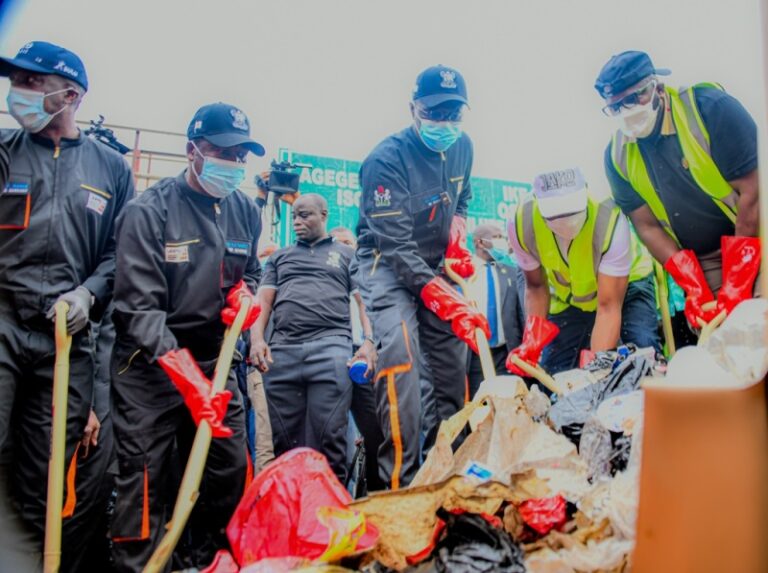
Hamzat disclosed this on Saturday during the monthly environmental sanitation exercise in Festac, Amuwo-Odofin Local Government Area, saying the additional trucks would complement the existing Private Sector Participation (PSP) waste collection system. He said the move became necessary as the state grapples with rising volumes of waste generated by its rapidly growing population. According to him, the new vehicles would expand the state’s capacity to evacuate refuse and address areas where existing waste collection arrangements have struggled to cope with demand. “The state government will be bringing in another 220 trucks to make sure that we supplement our PSP,” Hamzat said. The deputy governor also urged residents to patronise accredited PSP operators rather than cart pushers, warning that the latter often operate outside the regulated waste management system. “What we need our people to also do is to make sure that they patronise their PSP, not the cart pushers, because they are not organised. You don’t know where the waste is ending up,” he said. Hamzat linked the growing waste challenge to Lagos’ expanding population, noting that the influx of people into the state inevitably increases the volume of refuse generated daily. “A lot of people are coming to Lagos, and therefore they generate waste. So part of what you can see that we are doing is that we are getting many more trucks to actually go and evacuate,” he said. He stressed, however, that government investment alone would not solve the waste problem without residents taking responsibility for proper disposal. Hamzat warned residents against dumping refuse in canals and drainage channels, saying blocked waterways could restrict the flow of stormwater and aggravate flooding during heavy rainfall. He called on communities to sustain regular environmental sanitation exercises, with the government encouraging residents to clean their surroundings at least once every month. “We cannot be a people without a healthy environment. It doesn’t matter what we do, a cleaner environment is what makes a city or a state sustainable,” he said. The deputy governor said the state’s community engagement efforts were designed to encourage residents to make environmental cleanliness a routine responsibility rather than an occasional exercise. He also addressed environmental management concerns in Festac, noting that the Federal Housing Authority had specific responsibilities in the area but stressing that residents and property managers remained subject to Lagos State’s environmental regulations. Hamzat commended the local government chairman and residents for participating in the sanitation exercise, saying community involvement remained critical to achieving a cleaner and healthier Lagos. Also speaking, Commissioner for the Environment and Water Resources, Tokunbo Wahab, said the state was recording improvements in waste evacuation following the deployment of 24-hour emergency response teams and interventions aimed at resolving challenges at landfills and dumpsites. Wahab said the government had intensified discussions with PSP operators to improve their performance and ensure more efficient collection of household waste across the state. He explained that the state had also intervened in areas where the Lagos State Waste Management Authority (LAWMA) would ordinarily not operate, as part of efforts to close gaps in waste evacuation. According to the commissioner, government was supporting PSP operators to strengthen their operations, while residents were expected to pay for waste collection services in accordance with the polluter-pays principle. He said the arrangement was intended to ensure that operators had the resources required to deliver effective services while residents received value for the payments they made. Wahab further disclosed that Lagos was moving away from the conventional linear waste management model of “collect and dump” towards a circular system that prioritises waste recovery and conversion into useful resources. He said the transition had already resulted in the development of material recovery facilities in Badagry and Epe, alongside transfer stations at Solus and Olusosun. On the activities of cart pushers, Wahab said the government was engaging with them but would not pursue policies that could create additional environmental or security risks. He said investigations had shown that some cart pushers dumped collected waste indiscriminately, including in drainage channels and road medians, thereby contributing to environmental degradation and increasing the risk of flooding. The commissioner said the government’s broader objective was to establish a more organised and sustainable waste management system in which residents, operators and government agencies would each play clearly defined roles. Also, the Head of Service, Bode Agoro, monitored the exercise in Bariga Local Council Development Area, LCDA, alongside other Permanent Secretaries, including the Permanent Secretary, Office of Environmental Services, Omobolaji Gaji. The officials inspected Ewenla, Adetoke and Emmanuel Church streets, through Omobokun to New Garage, as part of efforts to assess compliance and encourage residents to maintain clean surroundings. Represented by the Permanent Secretary, Public Service Office, Sunkanmi Oyegbola, Agoro expressed concern over the attitude of some residents towards environmental cleanliness and urged Lagosians to take ownership of their immediate environment. Agoro stressed that environmental cleanliness should not be left entirely to government, noting that residents have a responsibility to complement the state’s efforts by keeping their homes, streets and communities clean. He added that while the government continues to provide infrastructure and other facilities to support the development of Lagos, residents are expected to reciprocate by protecting and maintaining those facilities and ensuring a clean environment.