‘I Have Done Nothing’: Obasanjo Recalls Rejecting US Asylum Offer Ahead Of Abacha Arrest
LAGOS, Nigeria — Former Nigerian President Olusegun Obasanjo has revealed that he flatly rejected an offer of political asylum from the United States government in 1995, choosing instead to face the military regime of General Sani Abacha.
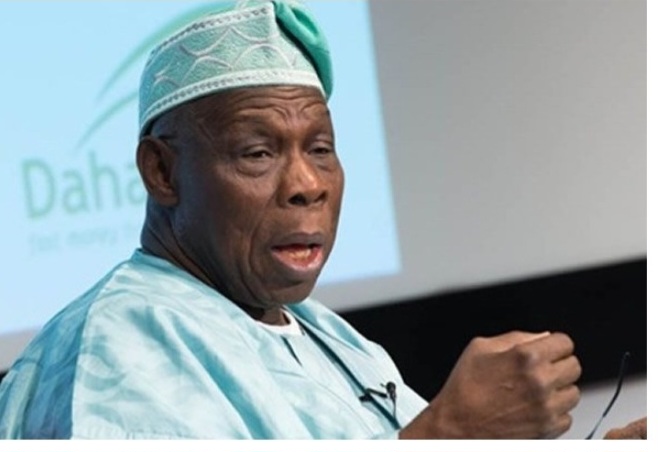
Speaking recently at an event organized by the Department of School Library and Media Technology at the University of Ibadan, the elder statesman detailed the dramatic chain of events that led to his high-profile arrest, imprisonment, and eventual transition back to civilian power.
The Warning in Copenhagen
The former general recalled that the saga began while he was attending an international conference in Copenhagen, Denmark.
It was there that the American Ambassador to Nigeria reached out to him with an urgent, classified warning.
“The ambassador told me that the US government had intercepted information that Abacha wanted to arrest me and liquidate me,” Obasanjo stated.
“He told me, ‘Don’t go back to Nigeria. The US government is offering you political asylum.'”Despite the severe threat to his life, Obasanjo stated that his conscience would not allow him to flee.”This was difficult for me. I haven’t done anything. What do they want to arrest me for? I don’t want political asylum,” he recalled thinking.
Arrest at the Farm
Obasanjo’s defiance was met with immediate state action upon his arrival back in Nigeria. Security forces confiscated his passport at the airport.
Undeterred, he drove straight to his farm, only to find it entirely compromised.
His personal security details intercepted him at the gate, warning him that the entire property was surrounded by state operatives. Shortly after, a plainclothes policeman arrived at the farmhouse, delivering an “invitation” from an Assistant Inspector-General of Police.
Refusing to be carried away in a police vehicle, Obasanjo insisted on driving his own car to the station, where he was officially taken into custody.
Jimmy Carter’s Midnight Intervention
The arrest triggered immediate international outrage. Former United States President Jimmy Carter launched a direct diplomatic intervention, appealing heavily to General Abacha.
The pressure initially worked. Obasanjo was moved from a secret detention facility into house arrest. However, the reprieve was short-lived.
“One night around 1:00 AM, while I was playing squash, security operatives came to the house,” Obasanjo said. Without warning, he was bundled out of the residence and transferred directly to a maximum-security prison.
Obasanjo, who had previously served as Nigeria’s military Head of State in the late 1970s, remained behind bars until June 1998, when Abacha died suddenly. Less than a year after his release, Obasanjo won the 1999 democratic elections, serving as Nigeria’s civilian president until 2007.