Wole Soyinka At 92; An Enigma Of Intellectual Acme
By Mark Adebayo
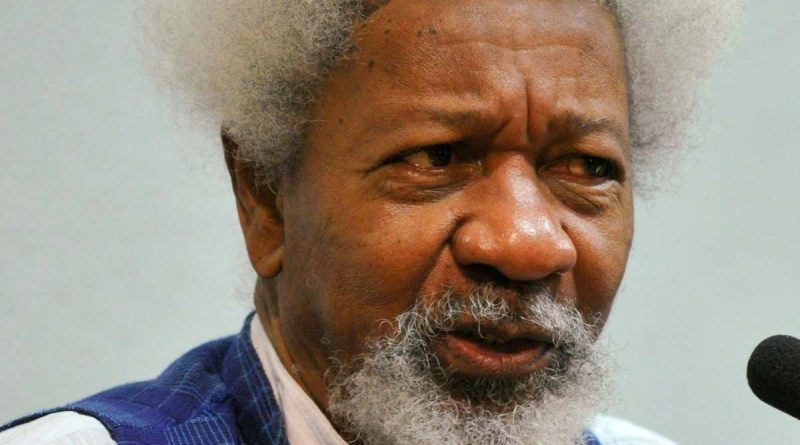
On July 13, 1934, a child named Akinwande Oluwole Babatunde Soyinka was born in Abeokuta, Nigeria. Decades later, that child would fundamentally alter the landscape of global literature and political activism. As he hits his 92nd year on earth, Soyinka stands not merely as a celebrated historical figure, but as an active, unyielding monument of intellectual prowess and moral courage.
He remains the ultimate personification of the “enigma”—a man whose sharp mind and uncompromising pen continue to defy easy categorization or opportunistic generalization. Wole Soyinka is an exemplary enigma of intellectuo-academic acme which is the standard that the academic-minded students who hope to be counted among intellectual greats aspire to. He raised the bar of intellectual depths beyond literature, incursed into the multidisciplinary constellation and opened the gates of endless possibilities, hitherto unfathomed, into the universe of creativism and went ahead to break the bar again, and again. He never stops! Does he?
To understand the intellectual apex that Soyinka represents is to look back at 1986. When the Swedish Academy awarded him the Nobel Prize in Literature, he broke a historic barrier as the first African laureate in that category. Yet, Soyinka did not view the prize as a personal peak or a token of Western validation. Instead, it was an acknowledgment of a standard he had already set. Through foundational masterpieces like The Lion and the Jewel, A Dance of the Forests, and the globally studied tragedy, Death and the King’s Horseman, Soyinka successfully forged a pristine literary path. He masterfully wove complex Yoruba mythology, philosophy, and cosmologies with the rich structural traditions of Western drama. He dared to educate the West of the African historical and philosophical identity in the language of the West rendered in a sophisticated web of tantalizing, oftentimes abstruse, construct that marvels and baffles the reader. He remains unapologetic about his creative enigma. A lazy mind cannot read Kongi.
He did not write to explain Africa to the outside world; he wrote because the African reality possessed an intrinsic, undeniable depth that demanded a global space.
However, what truly elevates Soyinka into a rare tier of intellectual supremacy is his lifework outside the quiet safety of an academic office.
For “Kongi,” as he is affectionately known, intellect is a weapon meant for the trenches of social justice. His defining maxim—”The man dies in all who keep silent in the face of tyranny”—is not a hollow catchphrase; it is a code he has paid for with his own blood and freedom.His legacy of direct action reads like a gripping political thriller:The Broadcaster’s Studio (1965): He famously seized the Western Nigeria Broadcasting Service studio at gunpoint to demand the immediate cancellation of a rigged regional election.
Solitary Confinement (1967–1969): During the brutal Nigerian Civil War, he walked into the crossfire to secretly mediate peace between the federal government and the Biafran secessionists. This resulted in 22 months of solitary confinement. Denied pen and paper, his indomitable mind refused to break; he engineered literature on scraps of toilet paper, smuggled out to become his piercing prison memoir, The Man Died. This book, one of his indelible works, orchestrated my intellectual liberation as an impressionable secondary school student in the late 70s. It was practically abandoned to me by a teacher who got frustrated reading it – or unable to. I fell in love with it. Call it love at first sight. I must have read it over a dozen times that year and over a dozen more times thereafter to the extent that, even today, over forty years after, I can still quote many quotables from its pages ex tempore.
At that young age, it took some time, but I finally understood every element ‘The Man Died’ communicated and that book it was that introduced me to the idea of the universality of the rights of citizens to rebel against injustice and bad governance with intrepid defiance.
Decades later, when the tyrannical regime of General Sani Abacha marked him for assassination, Soyinka fled across the border on a motorcycle. From exile, he launched Radio Kudirat to sustain the fight for Nigeria’s democratic redemption.
At 92, an age where most icons recede into comfortable retirement, Soyinka’s mind remains dangerously sharp and profoundly engaged. He continues to step directly into modern debates, pushing African leaders toward aggressive, practical action regarding global reparatory justice for slavery and colonialism rather than empty political speeches. His intellectual weight remains so immense that major hubs like Lagos and London host synchronized global conversations on culture and memory just to dissect his worldview. Even in his personal acts, his legacy thrives through mentorship, guiding secondary school essay finalists via the Wole Soyinka International Cultural Exchange (WSICE).
Wole Soyinka remains an enigma because he successfully bridges the gap between the philosophical and the physical. He is a poet who knows how to fight, a playwright who has faced down dictators, and a global elder statesman who refuses to pacify his language for the sake of political correctness.
He has lived through empires, colonial transitions, civil strife, exiles, and democracy—yet his core remains entirely unbowed. Celebrating him at 92 is not just an exercise in looking back at old books; it is a celebration of a living, breathing conscience that continues to remind humanity that justice is the first and most absolute condition of our shared existence. In ‘The Man Died’, he wrote “Justice is the first condition of humanity”. That is an unimpeachable position and a universal truth.
Wole Soyinka has been a victim of government repression as well as of targeted misrepresentation mostly by ignorant ethnic jingoists and social media maggots. They expect him, now at 92, to continue doing what he did in his teens and 20s today while they lazy around on social media. They say he is too quiet as the government is not doing well. The question to ask these online smatchets is what they are doing with their youthful energy and how they compare in any way to Wole Soyinka at the same age they currently are at? In his 20s and 30s, Wole Soyinka already acquired global acclaim as an intellectual powerhouse and a political defiant who was oppressors’ nightmare without social media or even television.
What have their fathers of the same generation as Wole Soyinka’s achieved that we cancelebrate or acknowledge?It’s because he didn’t see the same energy to support his revolutionary activism in those days that he judged his generation – the passive majority – “a wasted generation”. The offsprings of a wasted generation are now calling on a 92-year-old veteran of revolutionary activism to do for them what they are supposed to be doing. Wole Soyinka has paid his own dues, set the templates, and deserves his rest, comfort, and peace at old age.
Do your own, leave an old man alone.
Happy birthday, Prof.
Mark Adebayo holds a Master of Philosophy in Political Anthropology and is a human rights activist, consultant, biographer, newspaper columnist, published author, and humanist. He is the current president of Pan-Nigerian Civil Society and Opposition Alliance, PANCSOA.