Non-Oil Sector Drives 95.8% Of Nigeria’s Real GDP, But Insecurity Threatens Economic Progress, Warns Senator Gbenga Daniel
LAGOS, Nigeria — Senator Gbenga Daniel has declared that Nigeria cannot achieve a sustainable, strong economy without addressing its pressing security challenges, describing national security as a critical piece of economic infrastructure.
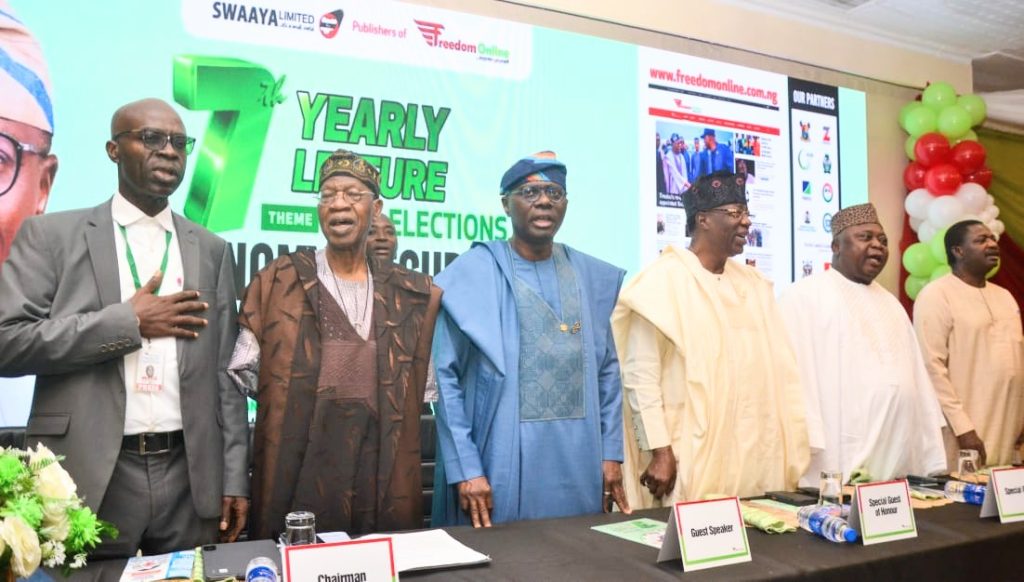
Speaking as the Special Guest of Honour at the Freedom Online Lecture with the theme:” 2027 Elections: Economy, Security And Nigeria’s Future” at the Sheraton Hotel in Lagos on Thursday, September 3, 2026, the lawmaker stressed that the country’s economic indicators and real-world security are deeply intertwined.
While acknowledging positive economic signals—including a 4.43 percent GDP growth rate in the second quarter of 2026 driven by improvements in agriculture and services—Senator Daniel emphasized that true economic progress must be measured by the daily experiences of ordinary Nigerians.
“Can a farmer safely reach the farm? Can a manufacturer produce competitively?” Daniel asked the audience, which included the Executive Governor of Lagos State. “When farmers are afraid to cultivate their land, food production suffers. When roads are unsafe, the cost of transporting goods rises.”
Highlighting the gravity of the situation, the Senator pointed to a sobering security statistic: more than 7,800 people were reported abducted between July 2025 and June 2026. He categorized this data not just as a security failure, but as a severe “economic warning” that discourages vital foreign and local investment.
A major highlight of the address was the shifting structure of the Nigerian economy. Senator Daniel revealed that the non-oil sector accounted for approximately 95.8 percent of real GDP in Q2 2026. He noted that sectors such as technology, financial services, construction, entertainment, and the digital economy are rapidly overtaking oil dependency, signaling a shift from “oil wealth to human wealth.”
To sustain this growth, he called for urgent infrastructural development and job creation, particularly for Nigeria’s massive youth population. Pointing to the economic synergy between Lagos and Ogun states as a blueprint for success, he challenged leaders to replicate that enabling environment across other regional hubs like Aba, Kano, Jos, and Maiduguri.
“The Nigeria we want tomorrow will be determined by the decisions we make today,” Daniel concluded, expressing ultimate optimism in the nation’s capacity to overcome its challenges through discipline, leadership, and robust security.