
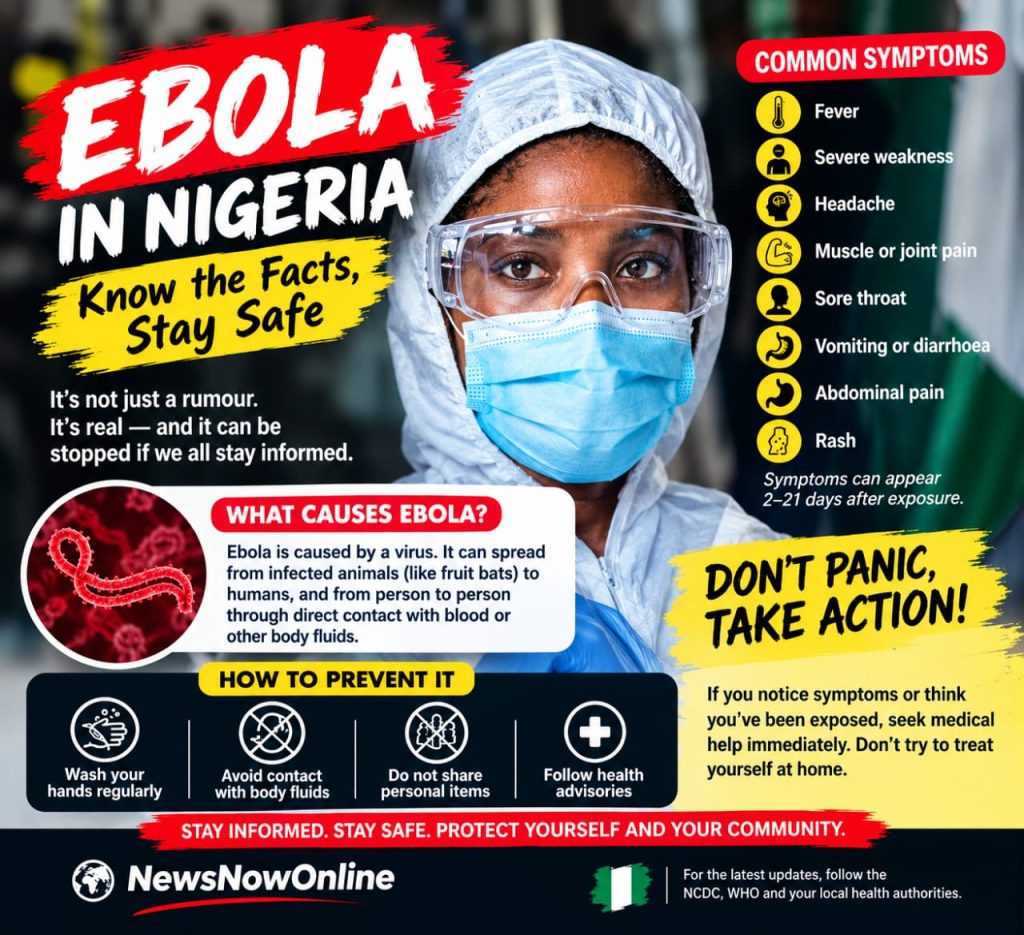
Ebola In Nigeria: Symptoms, Causes, Treatment And Prevention
By Joshua Oriola
Ebola is making headlines in Nigeria, and many people have questions. What causes it? How can you recognise the symptoms? And what should you do if you think you have been exposed?
Here are the important facts Nigerians need to know.
Is Ebola in Nigeria?
Yes. On October 20, 2026, Nigerian health authorities confirmed one case of Ebola Bundibugyo virus disease in the Federal Capital Territory, Abuja.
According to the World Health Organization (WHO), 44 contacts had been identified for monitoring as part of efforts to prevent further transmission.
Important: The 44 people are contacts being monitored, not 44 confirmed Ebola cases. Check official health updates for the latest figures.
What Causes Ebola?
Ebola is caused by a virus that can lead to severe illness in humans.
Some Ebola viruses originate in animals and can spread to humans through contact with infected animals or their bodily fluids. The virus can then spread between people through direct contact with the blood or other bodily fluids of someone who is infected and has symptoms.
Contaminated objects, such as bedding or clothing, can also pose a risk.
Ebola is not caused by stress or simply standing near an infected person.
What Are the Symptoms of Ebola?
Early symptoms can resemble malaria or other common illnesses.
Watch out for:
– Fever
– Severe weakness or tiredness
– Headache
– Muscle pain
– Sore throat
– Vomiting or diarrhoea
– Abdominal pain
– Rash
Symptoms can appear between 2 and 21 days after exposure.
Having these symptoms does not automatically mean you have Ebola. Medical assessment and laboratory testing are necessary to confirm the disease.
How Does Ebola Spread?
Ebola mainly spreads through direct contact with the blood or bodily fluids of an infected person who has developed symptoms.
You do not catch Ebola simply by being near someone. However, avoid contact with the bodily fluids of anyone suspected of having the disease.
What Should You Do If You Notice Symptoms?
If you develop possible symptoms and believe you may have been exposed to Ebola, take these steps:
1. Contact a healthcare professional immediately and explain your concerns.
2. Tell them about any possible exposure or recent travel to an affected area.
3. Avoid unnecessary physical contact with other people while awaiting medical advice.
4. Follow instructions from health professionals.
5. Do not attempt to treat suspected Ebola at home.
Do not assume every fever is Ebola. Malaria and other illnesses can cause similar symptoms, so proper medical assessment is important.
Can Ebola Be Treated?
Medical care can improve a patient’s chances of survival, but treatment depends on the virus responsible.
Care may include fluids, nutritional support, monitoring and treatment of complications.
Nigeria’s reported case involves the Bundibugyo virus. As of October 21, 2026, there is no approved specific antiviral treatment or licensed vaccine for this particular Ebola virus disease.
Anyone suspected of having Ebola needs prompt professional medical assessment and appropriate care.
How Can You Protect Yourself?
You can reduce your risk by following these precautions:
– Wash your hands regularly with soap and water.
– Avoid contact with the blood and bodily fluids of sick people.
– Do not handle items contaminated with bodily fluids.
– Follow instructions from public-health officials if identified as a contact.
– Avoid handling the body of someone suspected of dying from Ebola.
– Get health information from reliable sources rather than spreading unverified social-media messages.
Should Nigerians Be Worried?
The best response is to stay informed without panicking.
Health authorities are working to identify contacts and prevent further transmission. One confirmed case does not mean that everyone in Nigeria is at risk of infection.
If you think you have been exposed, seek medical advice promptly and follow official guidance.
Knowing the symptoms, understanding how Ebola spreads and acting quickly when exposure is suspected can help protect you and your community.
Where Can You Get Reliable Ebola Updates?
For the latest information, consult the Nigeria Centre for Disease Control and Prevention (NCDC), the Federal Ministry of Health and Social Welfare, and the World Health Organization.
Medical disclaimer: This article is for educational purposes only and does not replace professional medical advice. Outbreak figures and public-health guidance may change as new information becomes available.